
Jewelry Science · Skin Health
Why Does Sterling Silver Tarnish on Some People and Shine Brighter on Others? The Skin pH Connection
Why does silver tarnish? The answer starts with the chemistry of your skin and the air around it. Two friends buy the same sterling silver necklace. Six months later, one clasp is gray-black and the other still catches the light. The difference is not the jewelry. It is the chemistry of the skin it sits against — and once you understand it, you can predict exactly how your own pieces will age.
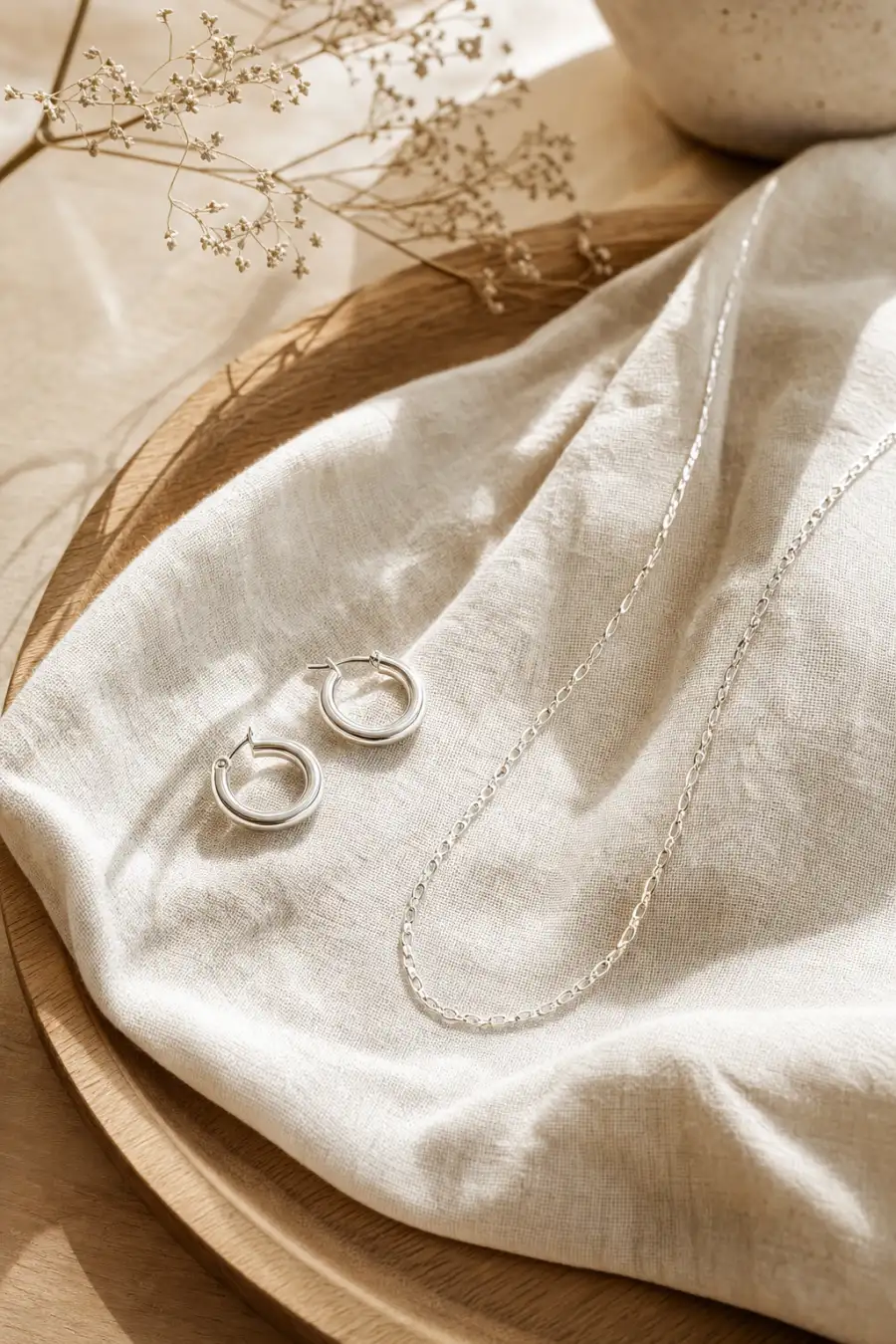
Why Does Silver Tarnish
Tarnishing is the slow reaction of silver with sulfur compounds in air, sweat, and skincare, which builds a dark film of silver sulfide on the metal’s surface — normal chemistry, not a product defect. Every piece of silver, from a five-dollar market ring to a fine sterling heirloom, does exactly the same thing when sulfur finds it.
The confusion starts because the same reaction happens at wildly different speeds on different bodies. One person wears a sterling ring daily and it stays mirror-bright for a year. Another person’s identical ring clouds over in a week, and her first thought is that the store sold her something cheap. Jewelry brands hear this every day, which is why the honest ones put the chemistry in writing. Jenny Bird’s materials page and Astrid & Miyu’s jewellery discolouration guide both say the same thing plainly: silver changes color because of your body and your environment, not because the metal is defective.
Your skin is a personal chemical fingerprint. No two people share the same skin pH, the same sebum output, or the same sweat composition. Those three variables decide what happens to silver the moment it touches you. Before you blame the product, it is worth knowing exactly which of the three you are.
| What your skin brings | The chemistry | What it does to silver |
|---|---|---|
| Skin pH (the acid mantle) | Weakly acidic, around pH 4.5–5.75 | A more acidic surface speeds the sulfur reaction |
| Sweat composition | Water, salt, urea, lactic acid, trace sulfur | Sulfur in sweat is the main tarnish trigger |
| Sebum (skin oil) | An oily film of fatty acids | Coats the metal, blocks air and sulfur, keeps it bright |
| Product residue | Perfume, lotion, sunscreen, hairspray | Leaves reactive chemicals sitting against silver |
The reason acidity matters is a small but useful detail of the chemistry. Silver sulfide forms more readily in a wet, slightly acidic environment than on a dry, neutral surface. Your acid mantle — that faintly acidic film every healthy body produces — is exactly the kind of environment the reaction likes. Add sweat, which is both moisture and a mild acid, and a piece of silver touching your skin sits inside its own little reaction chamber all day. That is why a necklace worn against bare, warm skin tarnishes faster than the same necklace hanging on a display hook.
Here is the part that flips most people’s expectations. A high-oil, low-sulfur skin type is actually the best friend a silver piece can have. Natural sebum lays down a thin protective film over the metal, and everyday friction from fabric and skin buffs the surface as you move. That is why the same bracelet can look better after a month of daily wear than it did in the box. Meanwhile, a person with acidic, sulfur-rich sweat is not unlucky or careless. She simply has skin chemistry that talks to silver a little faster.
What Tarnishing Actually Is: The Sulfur Hiding in Air, Sweat, and Skincare
The dark film on old silver is silver sulfide, and it forms through a reaction you can write out in one line: silver plus sulfur plus oxygen, in the presence of moisture, produces silver sulfide and water. Sterling silver is 92.5% silver alloyed with 7.5% copper for strength. It is the silver in that alloy that grabs sulfur from its surroundings and turns black; the copper is what can later lend a faint green or brown tone as it oxidizes on its own.
Sulfur is not some rare industrial chemical. It is in car exhaust and in the air of coastal and urban areas, which is why silver tarnishes faster in a city than in a clean dry climate. It rides in your sweat, especially if your diet is rich in sulfur-heavy foods like eggs, garlic, onion, and cruciferous vegetables. It hides in perfume, sunscreen, hairspray, and even some lotions. And it lurks in surprising places around the house: rubber bands, wool, certain papers, and the cardboard of a jewelry box can all feed the reaction while a piece sits in storage.
Moisture is the other half of the equation, because sweat and humidity act as the medium that lets silver, sulfur, and oxygen meet. This is why silver darkens fastest when it is wet — during a workout, after a swim, or in a humid summer. It is also why chlorine deserves special caution: chlorine in pools and hot tubs does not just feed the tarnish reaction, it can corrode the copper in sterling silver and leave a rough, whitened surface that is much harder to restore.
The honest part. Tarnish is not fading, it is not flaking, and it is not a sign that your silver is fake or thin. Solid sterling silver tarnishes because it is real silver — the same metal that has darkened in jewelry boxes for centuries and polished back to bright every time. A piece that tarnishes quickly is telling you something true about your skin chemistry, not about the jeweler.
Why the speed varies so much between two people comes down to four levers. First, how much sulfur your sweat carries, which your diet and metabolism influence. Second, your skin’s pH, with a more acidic surface encouraging the reaction. Third, where you live — sulfur-rich city or coastal air attacks silver faster than dry inland air. Fourth, how much product residue you leave sitting against the metal, since perfume and sunscreen can act as sulfur and chemical carriers right on the surface. Change any one lever and the same necklace behaves differently.
Why Some Silver Gets Brighter With Wear — and How to Reverse Tarnish at Home
Now the counterintuitive side of the story. Silver that gets brighter with wear is not a myth. It happens through two physical effects working at once. Friction is the first: as a ring slides against fabric and skin all day, it gets a constant micro-polish that rubs the early silver sulfide away before it can build up. Protection is the second: a thin coat of natural skin oil seals the surface so air and sulfur have a harder time reaching the metal. People with moderate oil and low-sulfur sweat wear their silver bright almost by accident.
For everyone else, tarnish is fully reversible at home, and the fix is more physics than elbow grease. The classic household method reverses the reaction chemically instead of scraping it off. It uses three things you already have:
- Line a glass or ceramic bowl with aluminum foil, shiny side up.
- Lay the tarnished silver directly on the foil and sprinkle baking soda (plus a small pinch of salt) over it.
- Pour hot water into the bowl to cover the silver, then let it sit for a few minutes.
- Lift the piece out, rinse it, and dry it with a soft cloth. The dark film should be gone.
What is happening is a small electrochemical exchange. Aluminum gives up electrons more easily than silver does, so in the hot, salty, soda-laced water it takes the sulfur back and leaves the silver behind. The metal is not scrubbed or worn away — it is returned. For light everyday care, a simpler routine does the job: warm water, a drop of mild dish soap, a soft cloth, and a dedicated silver polishing cloth for the final shine. A chemical silver dip is the fast option, but it is aggressive, and it can over-clean a piece if left too long.
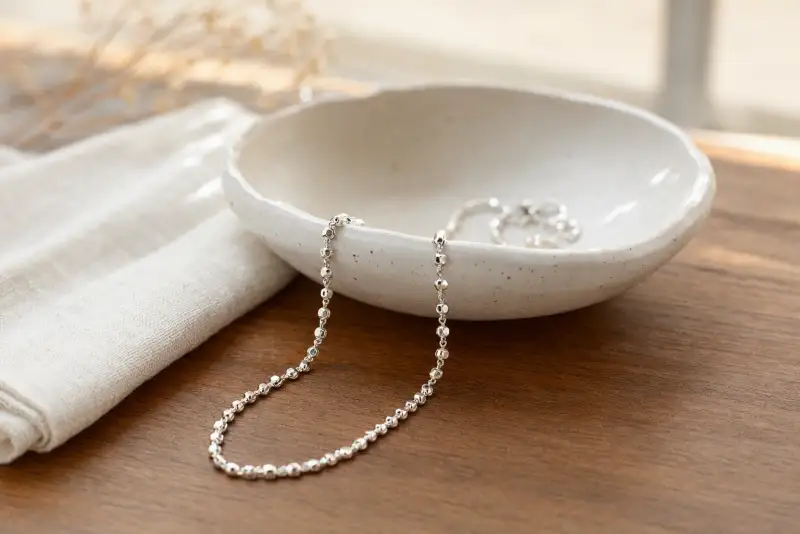
Between cleanings, a handful of habits stop the reaction from starting in the first place:
- Apply perfume, lotion, sunscreen, and hairspray first, then put silver on after they dry.
- Wipe silver with a soft dry cloth before you store it, so sweat and product residue never sit on the metal overnight.
- Store silver in a sealed anti-tarnish bag or a pouch in a cool, dry place, away from rubber bands and cardboard.
- Remove silver before swimming, showering, saunas, and workouts, then rinse and dry it if it got wet.
- Give worn silver a quick cloth buff once a week — it clears early tarnish before it builds up.
Two cautions before you clean. Skip the foil-and-soda bath and the silver dip on pieces with gemstones, pearls, or an intentionally oxidized (blackened) finish — the treatment can dull or damage them. And never clean silver with toothpaste, no matter how many old tips recommend it; toothpaste is abrasive enough to leave micro-scratches on a polished surface.
Frequently Asked Questions
Why does sterling silver tarnish on some people and not others?
Tarnish is silver reacting with sulfur compounds in the air and in your sweat, and the reaction runs faster when your skin is more acidic or your sweat carries more sulfur. Since no two people share the same skin pH and sweat chemistry, the same silver piece tarnishes at very different speeds on different bodies.
Does your skin pH affect how fast silver tarnishes?
Yes. Healthy skin has a weakly acidic surface called the acid mantle, around pH 4.5 to 5.75. A more acidic environment, combined with sulfur-bearing sweat, encourages the reaction that forms dark silver sulfide on the metal — which is why acidic skin types often see tarnish sooner.
How do you keep silver jewelry from tarnishing when you wear it daily?
Put silver on after lotion, perfume, and sunscreen have dried, wipe it with a soft dry cloth before you put it away, store it in a sealed anti-tarnish bag or pouch, and take it off before swimming, showering, or working out. These small habits slow the sulfur reaction considerably.
Why does silver jewelry sometimes get brighter with wear?
Daily wear polishes silver in two ways at once. The friction of fabric and skin buffs the surface like a micro-polish, and natural skin oils coat the metal to block air and sulfur. On skin with moderate oil and low sulfur, regularly worn silver stays brighter than a piece left untouched in a drawer.
How do you remove tarnish from silver jewelry at home?
The gentlest method is warm water, a drop of mild dish soap, and a soft cloth, finished with a dedicated silver polishing cloth. For heavier tarnish, line a bowl with aluminum foil, add baking soda and hot water, and let the silver sit for a few minutes — the foil and soda reverse the silver sulfide back to silver. Skip this on pieces with gemstones or an oxidized finish.
Keep reading the Wearlumi Jewelry Science collection
One Comment