Why Does a Silver Polishing Cloth Turn Black?
If you have ever cared for jewelry, you might wonder why does a silver polishing cloth turn black after just a few gentle passes. Gray streaks quickly turn into dark patches, even while the metal looks brighter. That change is normal during tarnish removal, but it raises an important question: should you keep using the cloth or throw it away?
A silver polishing cloth turns black as its treatment works on the surface and material collects in the fabric. Blackening alone does not mean the cloth is exhausted. It also does not identify everything in the residue or prove that your jewelry is sterling silver. The useful questions are whether the cloth still works, whether it is appropriate for the finish, and what its manufacturer says about care.
In this guide
Why the cloth turns black during polishing
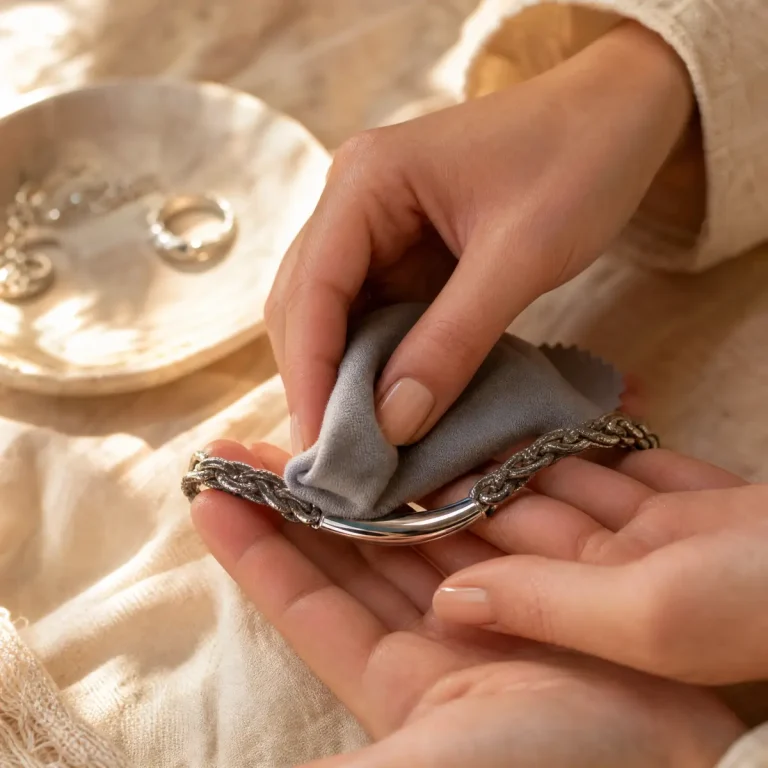
Silver tarnish is a surface reaction, rather than simply dust sitting on the metal. The Canadian Conservation Institute explains that dark silver tarnish consists mainly of silver sulfide, which forms through exposure to sulfur-containing compounds in the air. Its guidance also describes silver polishing cloths as fabric impregnated with abrasive material, particularly useful for lightly tarnished silver. See CCI Notes 9/7: Silver—Care and Tarnish Removal.
As you polish, the cloth works on that surface layer. The resulting dark marks should not be treated as a precise chemical report. Depending on the cloth and the jewelry, the appearance can reflect the cleaning treatment’s interaction with the surface and material removed during rubbing. Everyday surface contamination may also be present; color alone cannot tell you the proportions.
Manufacturer explanations reinforce the need for that distinction. Town Talk describes the blackening of its silver cloths as a chemical reaction rather than a buildup of dirt. That is an explanation for its own treated cloths, not a formula for identifying every black mark on every brand. Read Town Talk’s Silver Polishing Cloth instructions for its specific guidance.
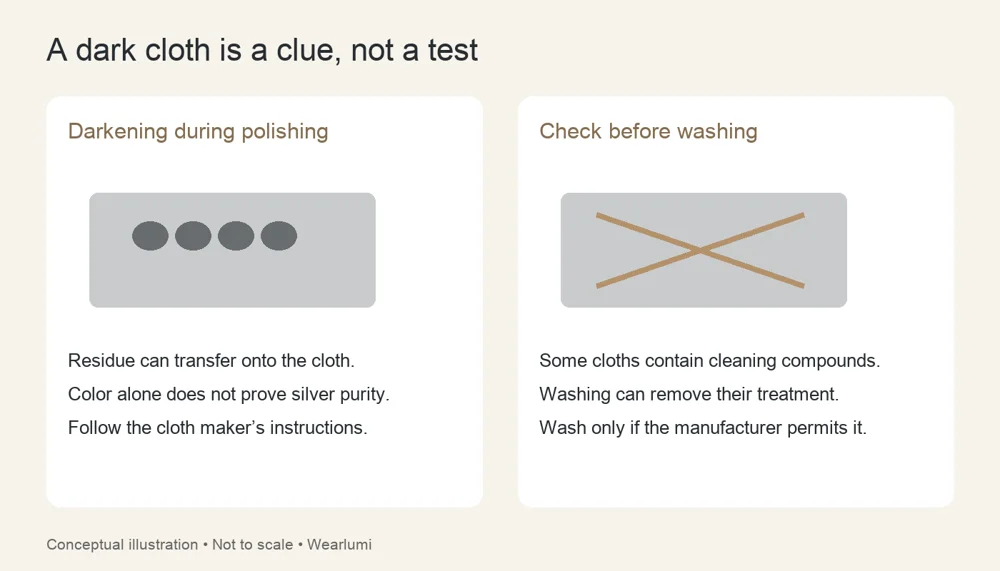
Most importantly, a cloth can keep darkening after visible tarnish has gone. In its abrasive polishing procedure, CCI warns that a clean pad can still turn dark as the abrasive removes silver from the surface. Stop according to the jewelry’s appearance and care needs, rather than continuing until a fresh area of fabric stays white. CCI Notes 9/11 explains this stopping point.
A black cloth is not automatically a worn-out cloth
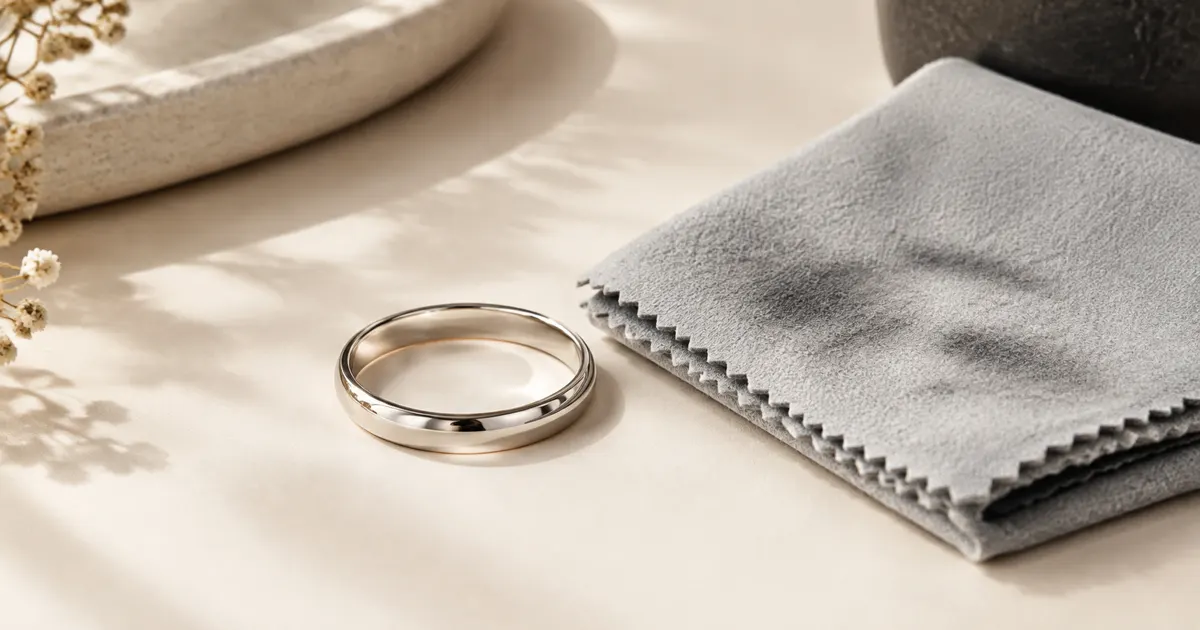
Understanding why does a silver polishing cloth turn black helps clarify that dark patches merely show active use. Discoloration does not, by itself, tell you how much effective micro-abrasive treatment remains in the fabric. Connoisseurs explicitly says its polishing cloth can be reused many times after turning black and recommends replacement when it no longer shines jewelry. See Connoisseurs’ polishing cloth care instructions.
Town Talk gives a different practical cue for its silver cloths: store them dry and replace them when they are quite black on both sides. These instructions belong to particular products. Together, they show why there is no universal shade of gray or black that marks the end of every cloth’s life. Follow the directions supplied with yours.
For routine care, move to another usable area of the cloth as directed and watch the silver under good light. If light tarnish lifts with gentle use, there is no reason to discard a cloth solely because it has dark patches. If it stops helping, consult the replacement instructions instead of increasing pressure.
Replace a cloth that has picked up grit or other contamination that could scratch the jewelry. Keep it separate from household cleaning rags, and avoid leaving it loose on a dusty surface. Its usefulness depends on its condition as well as its treatment; a visually dark cloth and a gritty cloth present different care decisions.
Can you wash a silver polishing cloth?
Do not wash a treated silver polishing cloth unless its manufacturer expressly permits it. Connoisseurs says laundering removes the polishers impregnated in its cloth. Town Talk also tells users not to wash its silver polishing cloths. A cleaner-looking cloth is not necessarily a more effective one if washing has removed the treatment.
This applies to washing by hand as well as putting the cloth in the laundry. Do not assume that a quick rinse, detergent soak, or spot cleaning is an approved workaround. Check the package or the manufacturer’s instructions before adding water or another cleaner. If the directions are missing, identify the cloth before trying to refresh it.
Plain wiping cloths are a separate category. CCI distinguishes washable cotton cloths used to remove residual polishing powder from cloths impregnated with polishing compound. A cloth’s soft feel or the words “polishing cloth” on a listing do not establish whether it is treated or washable. CCI’s discussion of cotton pads and cloths explains this difference.
Store your treated cloth dry and protected from dust, following its packaging directions. If it has been accidentally washed, check with the manufacturer about continued use or replacement. Adding homemade polishing mixtures will not reliably restore the original treatment.
How to use the cloth without overpolishing
Begin by confirming the material and finish. Read both the jewelry’s care instructions and the cloth’s directions. A cloth intended for exposed silver may be unsuitable for a coating, decorative finish, or nearby component. CCI recommends examining silver before cleaning and removing particles or residues that could interfere with polishing.
- Check for loose dirt. Remove dust gently with a clean, soft tool appropriate for the piece. Avoid rubbing grit across the surface.
- Use the designated polishing area. If the cloth has separate treated and finishing layers, follow the manufacturer’s sequence. Do not assume every layer serves the same purpose.
- Apply light pressure. Work carefully on accessible silver surfaces, avoiding stones and decorative details unless their care instructions allow contact.
- Pause and inspect. Stop when the intended silver surface looks adequately refreshed. Continued black transfer is not a reason to keep rubbing.
CCI notes that polishing removes some underlying silver along with tarnish, making restraint useful even with a gentle cloth. If a patch persists, do not assume more force will solve it. The mark may need assessment, or the piece may need a different care method. CCI’s silver-care guidance explains the effects of repeated tarnish removal.
For a broader cleaning sequence, read Wearlumi’s three-step guide to cleaning tarnished jewelry at home. Choose a method that fits the entire piece, including its stones, coatings, and construction.
Take extra care with plated and oxidized finishes
Silver-plated jewelry has a limited silver layer over another material. Repeated polishing can wear through that layer, especially where it is already thin or damaged. A cloth labeled for silver does not make unlimited polishing appropriate for silver plate. CCI warns that too much polishing can expose the underlying metal and advises considering whether damaged plating should be polished at all.
Gold-plated silver and gilded details need their own care instructions. CCI specifically warns that polishes damage gilding. Avoid working a silver polishing cloth across a gold-colored coating simply because the metal beneath it is silver.
Oxidized silver presents another issue: some dark areas are intentional. They can give a design depth or highlight recessed details. Polishing may remove that contrast and change the intended appearance. CCI advises avoiding polishing silver with an intentional patina; see its guidance on plating and intentional patination.
If you cannot distinguish an intentional finish from unwanted tarnish, consult the maker or a qualified jeweler before polishing. For an antique or historically significant piece, a conservator can help assess the surface. A dark mark on the cloth cannot resolve those questions.
What black marks cannot tell you—and better daily habits
A black polishing cloth does not authenticate silver, establish a silver percentage, or distinguish solid sterling from silver plate. Nor does its color identify the exact residue. CCI recommends examining identifying marks, construction, and worn areas when assessing silver objects. If composition matters, seek a professional assessment rather than using cloth discoloration as proof.
Better storage can reduce the need for repeated polishing. CCI recommends keeping silver free of dust and grime and describes sealed polyethylene bags with suitable sulfur-free, archival tissue as one storage approach. Store jewelry dry and protect individual pieces from rubbing together, while following any additional requirements for stones and other materials.
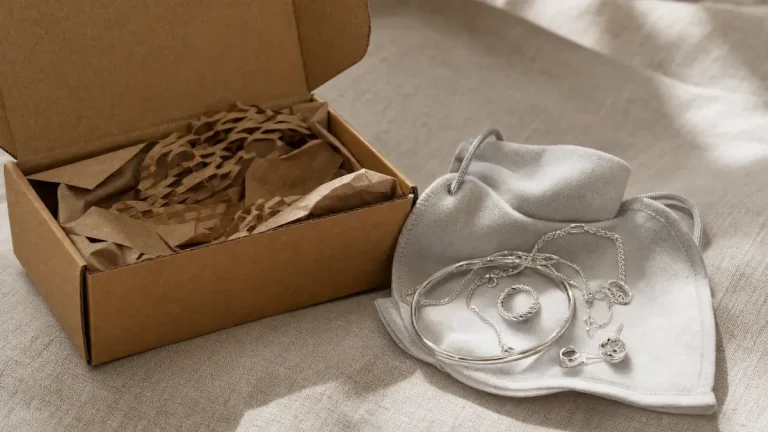
Packaging deserves attention, too. Wearlumi’s guide to why silver tarnishes in cardboard boxes explores that storage question. For the conservation basis of protective storage, consult CCI’s Storage and Display recommendations.
Now that you understand why does a silver polishing cloth turn black, keep your care routine simple: use a compatible cloth gently, stop once the intended finish is restored, and follow the manufacturer’s replacement directions. Protecting the jewelry structure matters far more than keeping the fabric clean.
Explore Wearlumi at wearlumi.com.