
How to Clean Tarnished Jewelry at Home: Safe Methods for Every Metal & Gemstone
That gray-black film on your favorite silver necklace is not a sign of cheap jewelry — it’s chemistry, and almost all of it can be reversed at home with three things you already own. Here’s how to clean tarnished jewelry safely, metal by metal and stone by stone.
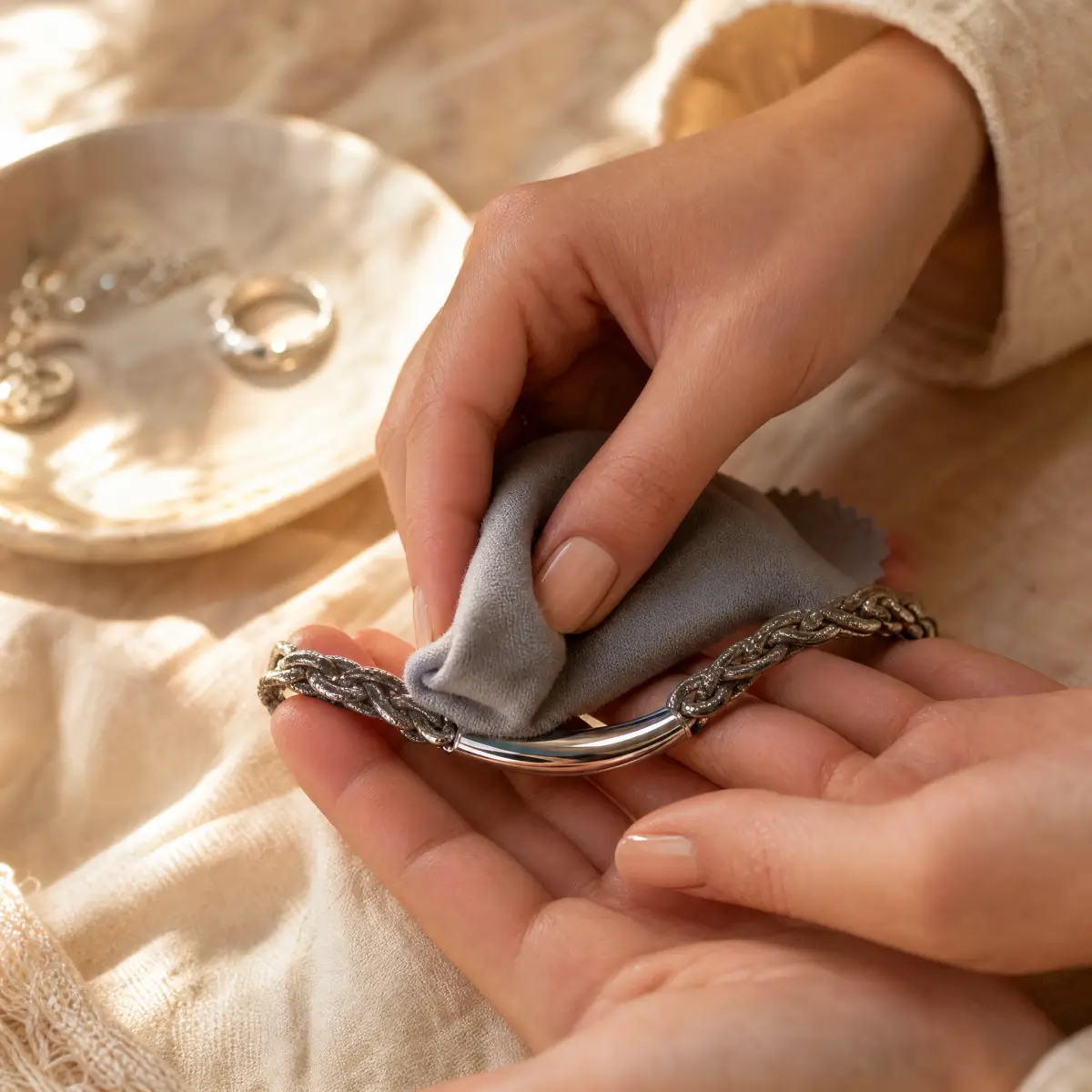
You open your jewelry box and the silver necklace you love looks dull, gray, almost black. Your first thought might be that you bought a bad piece. You didn’t. Tarnish happens to every piece of sterling silver, gold vermeil, and gold-plated jewelry on the market, because it is a chemical reaction — not a defect.
Here’s the better news: tarnish lives on the surface, and surface problems are fixable. In the next ten minutes you can restore almost any tarnished piece with a bowl of warm water, a few drops of dish soap, and maybe a sheet of aluminum foil. No expensive machines, no jeweler appointment.
One honest caveat before you start. If the discolored spot on your piece shows a different-colored metal underneath — a copper tone peeking through silver, for example — that is plating wear, not tarnish, and no cleaning method can reverse it. If the film is even, dark, and sits on the surface, keep reading. Everything below will bring the shine back.
How to Clean Tarnished Jewelry
Tarnish is a thin layer of corrosion that forms on the surface of silver, copper, and brass when they react with sulfur compounds in the air, sweat, and skincare products — on sterling silver it appears as a dull gray-black film of silver sulfide.
The reaction behind that black film is called sulfidation. Silver atoms in your jewelry bond with hydrogen sulfide in the air — the same trace gas that gives eggs their smell — and form silver sulfide, a dark compound that coats the surface. Because sterling silver is 92.5% silver alloyed with 7.5% copper, and copper sulfides are dark too, the tarnish looks gray-black rather than pure black.
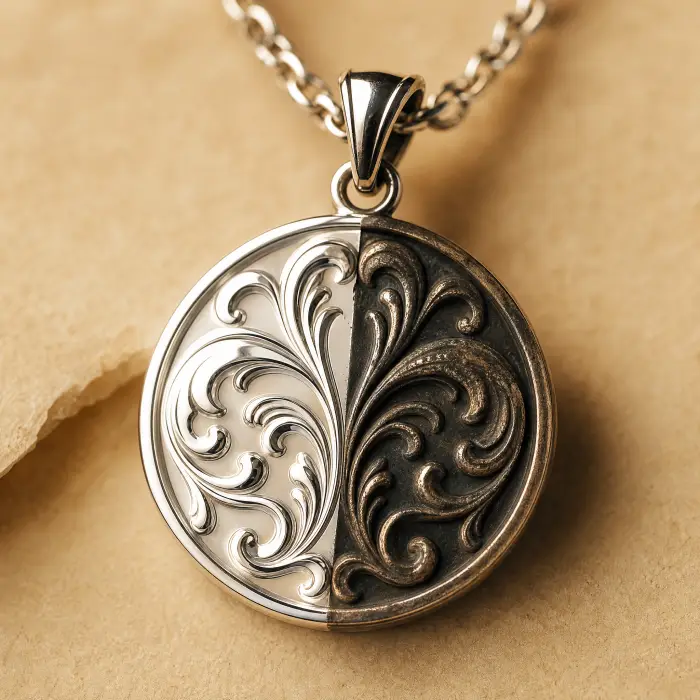
How fast the film forms depends on your environment. Sulfides are everywhere: air pollution, car exhaust, cooking fumes, wool, and rubber all release them. Add humidity, sweat (which is mildly acidic), perfume, lotion, and sunscreen, and the reaction accelerates. That’s why one person’s ring tarnishes in a month while another’s stays bright for a year.
Solid high-karat gold almost never tarnishes, which is why 14K and 18K pieces stay shiny for decades. Gold-plated jewelry sits on a base of copper or brass, and gold vermeil specifically over sterling silver. Either way, the base metal can tarnish from underneath and slowly dull the gold finish.
Here’s the diagnosis that saves you time: if the darkened layer is smooth and even, it’s tarnish and you can clean it. If you can see a different metal showing through, the plating has worn off and cleaning won’t help. Check before you scrub.
How to Clean Jewelry at Home: 3 Safe Methods
All three methods below use supplies you already own. Work through them from gentlest to strongest: dish soap handles everyday grime and light tarnish, the foil method restores heavily tarnished silver, and a polishing cloth keeps pieces bright between deep cleans.
Method 1: Warm Water + Mild Dish Soap (Safe for Almost Everything)
This is the universal safe method — the one jewelers recommend for most pieces. Warm water loosens oils and residue; dish soap lifts them away. Nothing in this method can scratch metal or stone.
- Fill a bowl with warm water — comfortable to the touch, around 85–100°F. Never hot: heat can weaken the glue in stone settings and crack heat-sensitive stones.
- Add two or three drops of mild dish soap. Choose the most basic formula you can find — fragrance-free and bleach-free — and swirl it in.
- Soak the piece for 10–15 minutes so the soap can work into chain links and under settings.
- Brush gently with a soft-bristle toothbrush in small circles. Pay extra attention to earring posts, pendant backs, and the underside of ring settings — the places residue hides.
- Rinse under warm running water — with the drain stopper closed or a strainer underneath.
- Pat dry with a microfiber cloth, then wipe in a single direction to bring back the polish.
Safe for sterling silver, solid gold, platinum, diamonds, and hard gemstones like sapphire, ruby, topaz, and quartz. The one rule: pieces with pearls, opals, emeralds, turquoise, or amber should never be soaked. For those, skip ahead to the material table.
Method 2: Baking Soda + Aluminum Foil (The Heavy-Duty Silver Fix)
When sterling silver is so dark that dish soap barely makes a dent, reach for the foil method. It looks like a magic trick, but it’s actually a middle-school electrochemistry demo — and it works on silver sulfide, the exact compound causing the black layer.
In a warm baking-soda solution, aluminum (which gives up electrons more easily than silver) acts as a sacrificial electrode. The tarnish receives those electrons and converts back into pure silver metal, while the sulfur migrates over to the foil. In plain English: the black jumps off your jewelry and onto the aluminum.
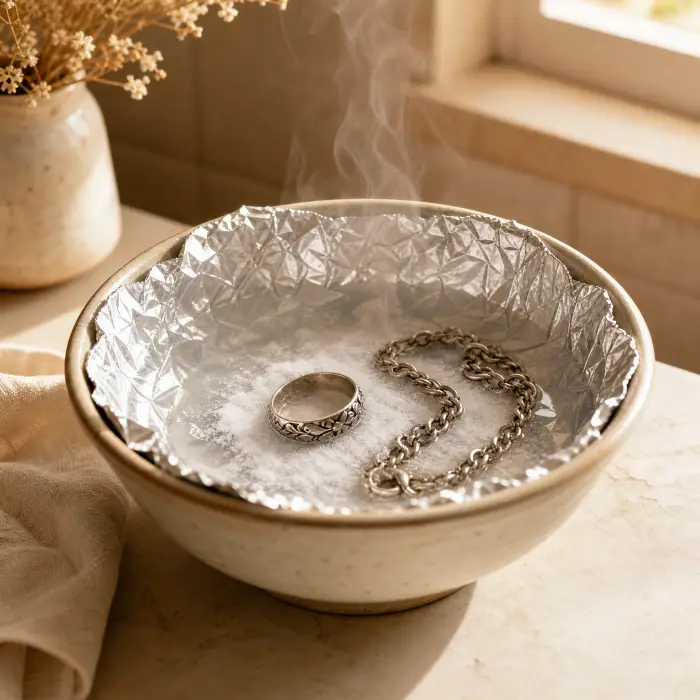
- Line a glass or ceramic bowl with aluminum foil, shiny side up.
- Place your tarnished sterling silver piece directly on the foil. The metal must touch the foil.
- Sprinkle about one tablespoon of baking soda per cup of water over the jewelry, then pour in hot (not boiling) water to cover it.
- Wait 2–5 minutes. You’ll see the foil darken as your silver brightens.
- Rinse with clean water and dry with a soft cloth.
Do not use the foil method on: oxidized (antiqued) silver, which will lose its intentional dark patina; gold-plated or vermeil pieces, because the reaction can weaken the bond between plating and base metal; anything with gemstones, especially pearls, opals, and amber, which soaking and heat damage; and rhodium-plated white gold, whose rhodium finish can be worn away.
Method 3: Polishing Cloth (Daily Maintenance)
A jewelry polishing cloth is a treated cloth that does two jobs at once: fine abrasives remove thin tarnish films, and anti-tarnish agents leave a protective layer behind. It’s the fastest daily tool you own — thirty seconds of wiping after you take a piece off keeps tarnish from ever getting a foothold.
Two rules. First, polishing cloths contain abrasives — gentle ones, but abrasives. Never use them on rhodium-plated white gold, because the rhodium layer is thin and polishing wears it through to the yellow gold beneath. Second, don’t bear down on gold-plated pieces; a light, single-direction wipe is plenty. And when a cloth turns black, it’s loaded with tarnish residue — don’t wash it, replace it.
What Not to Do: 6 Cleaning Mistakes That Damage Jewelry
The internet is full of homemade jewelry cleaner recipes that can permanently damage your pieces. Here are the ones to skip, and why.
1. Toothpaste. It polishes teeth with abrasive particles rated for enamel, not for jewelry. On pearls, opal, amber, and gold, toothpaste leaves a haze of micro-scratches no cloth can remove. Skip it entirely.
2. Bleach and chlorine. Chlorine is jewelry’s worst enemy. It attacks the alloy metals in gold and silver and can literally dissolve solder joints. Never clean with bleach — and take jewelry off before you get in a pool.
3. Ultrasonic cleaners on the wrong stones. Ultrasonic vibration works wonders on diamonds and plain gold, but the shockwaves can shatter opals, pearls, and emeralds with internal fractures, and can shake glued-in stones loose.
4. Boiling water. Thermal shock cracks stones and weakens setting adhesives. Warm water is the ceiling.
5. Lemon juice and vinegar on plated pieces. Acids strip gold plating and etch soft, porous stones. The lemon-and-salt trick is for solid copper and brass only — and even then, rinse and dry immediately.
6. Stiff brushes and powdered cleansers. Anything harsher than a soft-bristle toothbrush leaves micro-scratches that build into a permanently matte finish.
How to Clean Jewelry by Material: Quick-Reference Table
Every material has a safest method and a list of things that will ruin it. When a piece combines metal and delicate stones, treat the whole piece to the standard of its most fragile material.
| Material | Safest method | Avoid |
|---|---|---|
| Sterling silver | Dish-soap soak; foil method for heavy tarnish | Bleach, boiling water, toothpaste |
| Gold vermeil / gold-plated | Warm water + dish soap, pat dry immediately | Polishing cloths, foil method, acids, overnight soaking |
| Solid 14K / 18K gold | Dish-soap soak or ultrasonic cleaner | Abrasive pastes, chlorine, toothpaste |
| Rhodium-plated white gold | Warm water + dish soap only | Polishing cloths, foil method |
| Platinum | Dish-soap soak; ultrasonic for a deep clean | Abrasive polishes |
| Copper & brass | Lemon + salt paste, rinse and dry immediately | Leaving acid on the surface |
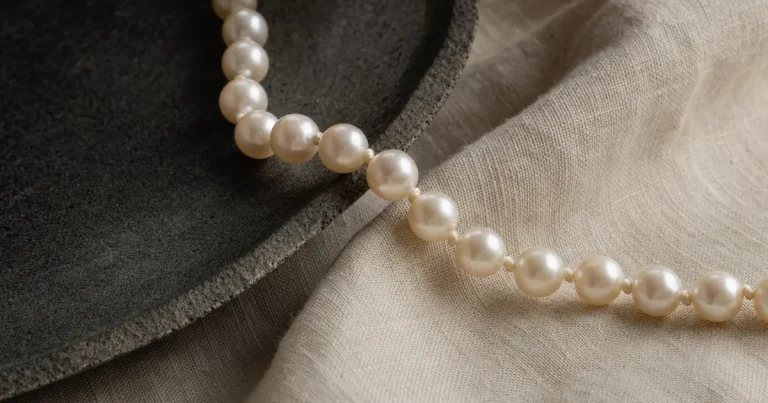
| Pearls | Wipe with a soft damp cloth after each wear | Soaking, soap, ultrasonic, foil method |
| Opal / turquoise / amber / emerald | Dry or barely damp soft cloth | Water soaks, ultrasonic, chemical dips |
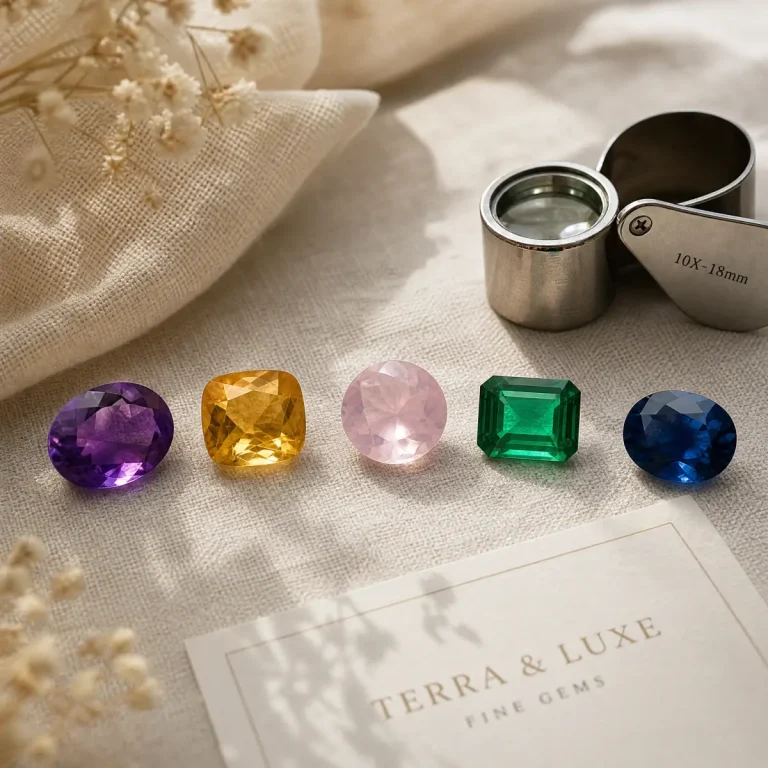
Not sure how fragile your stone is? A gem’s Mohs hardness number tells you at a glance whether it can handle everyday wear — and everyday cleaning.
How to Keep Jewelry from Tarnishing Again
What you do after cleaning matters more than the cleaning itself. Tarnish comes back fastest on damp, unrinsed, poorly stored pieces. Lock in these habits and deep cleans become a once-a-season event.
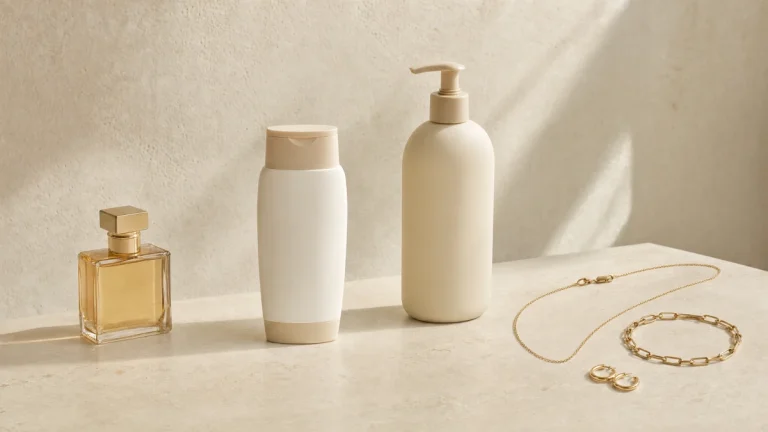
- Last on, first off. Perfume, lotion, sunscreen, and makeup go on first and get time to absorb. At the end of the day, jewelry comes off before anything else.
- Remove before the four tarnish accelerators: showering (shampoo residue), swimming (chlorine and salt), working out (acidic sweat), and sleeping (friction against pillows).
- Dry completely after every clean. Silver sulfide forms faster in moisture — a piece put away even slightly damp can tarnish within days.
- Store each piece in its own sealed zip-top bag. Less air means fewer sulfides reaching the metal. Toss a silica gel packet into your jewelry box to absorb humidity and swap it every few months. Our full jewelry storage guide covers this in detail.
- Add anti-tarnish strips to your jewelry box. The strips absorb sulfides before your jewelry does.
- Give every piece a 30-second polishing-cloth wipe before storing. It removes the day’s oils before they have time to react.
Frequently Asked Questions
How do you clean tarnished jewelry at home?
Start with the gentlest method: soak the piece in warm water with a few drops of mild dish soap for 10–15 minutes, brush gently with a soft toothbrush, rinse, and dry completely with a microfiber cloth. For heavily tarnished sterling silver, use the baking-soda-and-aluminum-foil method. Always match the method to the material — pearls, opals, and plated pieces need the gentlest treatment.
Does baking soda and aluminum foil really clean silver?
Yes. It’s an electrochemical reaction: aluminum gives up electrons, the silver sulfide tarnish converts back into pure silver metal, and the sulfur transfers to the foil. You’ll see the foil darken as the silver brightens, usually within two to five minutes. It’s safe for plain sterling silver but should never be used on oxidized silver, plated pieces, or jewelry with gemstones.
Can I use toothpaste to clean my jewelry?
No. Toothpaste contains abrasive particles designed to polish tooth enamel, which is far harder than most jewelry materials. On gold, silver, pearls, opal, and amber, it leaves micro-scratches that build into a permanent haze. Stick to mild dish soap and a soft cloth.
Is an ultrasonic cleaner safe for my jewelry?
Only for the right pieces. Ultrasonic cleaners work well on diamonds, solid gold, and platinum, but the high-frequency vibration can shatter opals, pearls, and fracture-filled emeralds — and it can shake glued-in stones loose. Check the material table before you drop anything in.
How do I keep sterling silver from tarnishing?
Remove your silver before showering, swimming, working out, and sleeping; apply perfume and lotion before putting it on; wipe it with a polishing cloth after wear; and store each piece in its own sealed zip-top bag with a silica gel packet. Less air, less moisture, and less sulfide contact means a much slower tarnish rate.
What is the safest homemade jewelry cleaner for gold-plated jewelry?
Warm water with two or three drops of mild, bleach-free dish soap. Soak for ten minutes, brush gently with a soft-bristle toothbrush, rinse, and pat dry right away. Skip the foil method, polishing cloths, and acidic cleaners — all three can thin or strip the plating.
Clean, dry, and stored right — jewelry that lasts for years
More jewelry care guides from Wearlumi, for pieces made to be worn every day

5 Comments