
10K vs 14K vs 18K vs 24K Gold: The Complete Purity & Durability Guide
When comparing 10k 14k 18k 24k gold, Most people walk into a jewelry store with one assumption: the bigger the number, the better the gold. That math falls apart fast when you realize the “best” karat depends entirely on how you actually wear your jewelry.
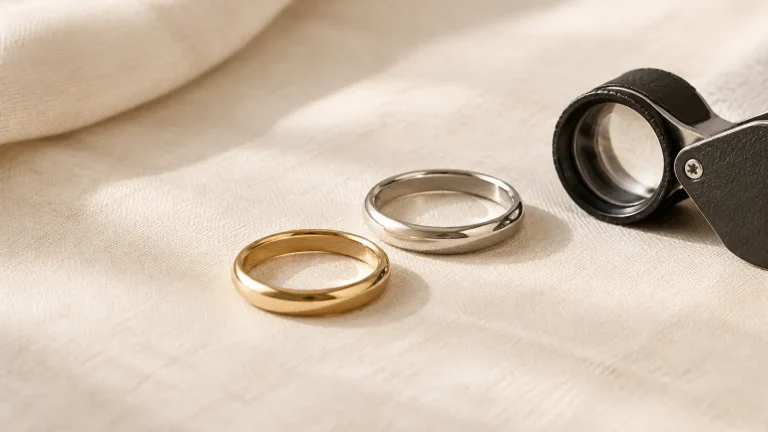
10K 14K 18K 24K Gold
Karat (abbreviated K) is a purity scale that divides gold into 24 parts, so 24K gold is 99.9% pure gold, 18K is 75% gold, 14K is 58.3% gold, and 10K is 41.7% gold, with the remaining percentage made up of alloy metals — mostly copper, silver, and zinc — that make the metal harder and more scratch-resistant as the karat number drops.
A gold bar and a gold necklace are two completely different products. A bar sits in a safe forever, so purity is all that matters. A necklace gets wet in the shower, knocked against countertops, and tugged by sleeves every single day. The karat number tells you how much of what you’re buying is actual gold — and how well it will survive your life.
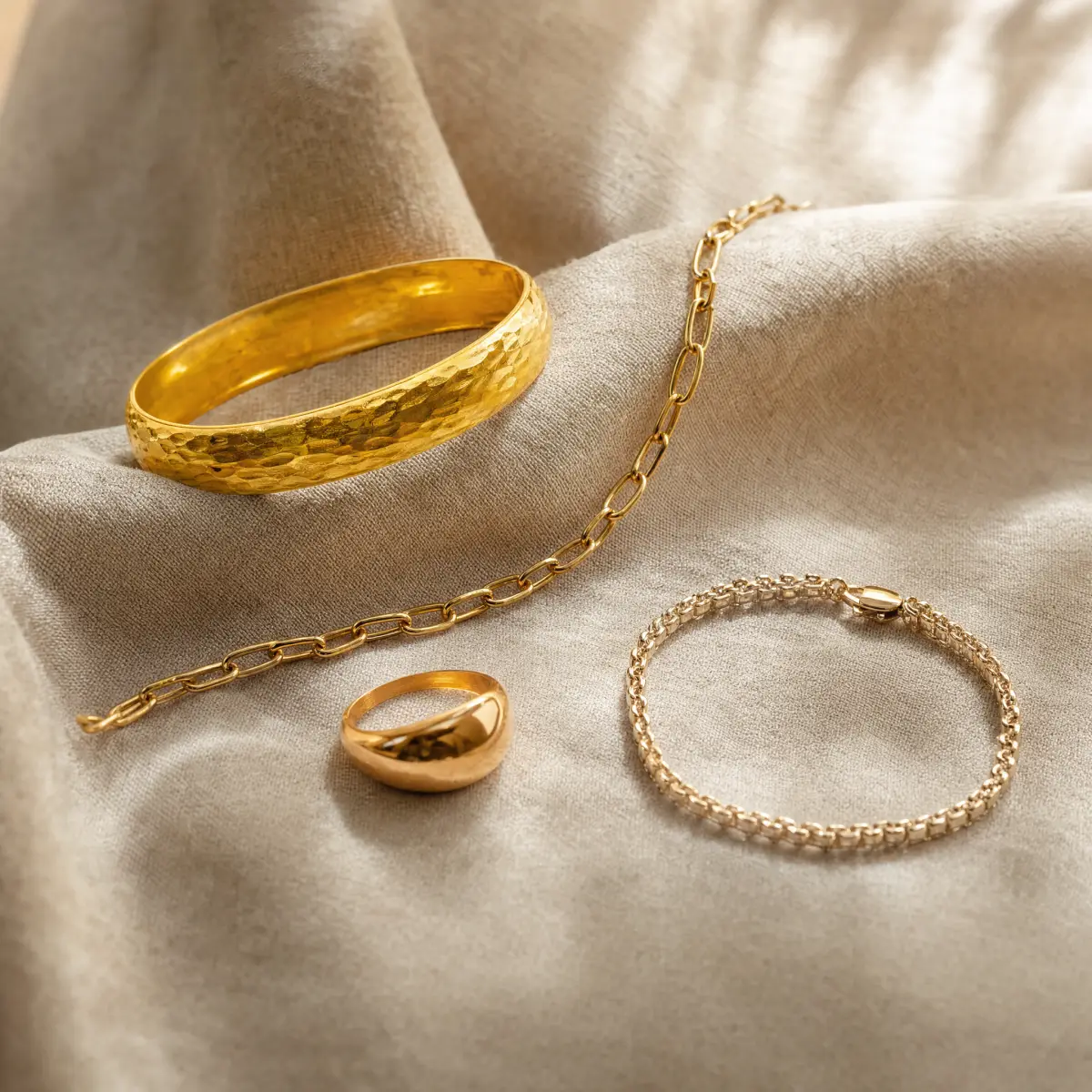
Gold Purity Chart
| Karat | Gold Content | Alloy Content | Hardness | Color | Typical Use |
|---|---|---|---|---|---|
| 24K | 99.9% | ~0.1% | Softest | Rich, saturated yellow | Bullion, heirloom pieces |
| 18K | 75% | 25% | Hard | Warm, close to pure gold | Engagement rings, fine jewelry |
| 14K | 58.3% | 41.7% | Harder | Light but true gold tone | Everyday jewelry, demi-fine |
| 10K | 41.7% | 58.3% | Hardest | Pale, muted yellow | Budget jewelry, workhorse pieces |
One more number worth knowing: 10K is the minimum purity that can legally be sold as “gold” in the United States. Anything below 41.7% gold has to be called something else entirely.
24K Gold: The Purest — and the Softest
Pure gold sits around 2.5 on the Mohs hardness scale — about as soft as a fingernail. It is one of the most malleable metals on earth: a single gram can be drawn into miles of wire or hammered into gold leaf thin enough to see through. That softness is a gift in a workshop and a problem on your hand.
A 24K ring picks up visible scratches within weeks of daily wear. A 24K bangle will dent if it meets a doorknob at the wrong angle. And in stone setting, pure gold is nearly useless — prongs that soft can’t hold a diamond for years. Nobody serious about jewelry sets a stone in 24K.
That doesn’t make 24K bad. It makes it specific. Buy 24K when you’re buying gold as an investment, as wedding gold for cultural traditions, or as a piece you’ll wear a few times a year and store the rest. For everything else, the alloyed karats below are better tools.
18K Gold: The Jewelry Industry Standard
At 75% gold and 25% alloy, 18K is the traditional choice of fine jewelers for one practical reason: it is the best compromise between richness and strength. It keeps a warm, saturated color very close to pure gold, and it’s hard enough to hold a diamond securely in prongs for decades.
That’s why engagement rings and fine jewelry default to 18K (or platinum). A jeweler setting a one-carat stone wants prongs that won’t bend if the ring snags a sweater — and 18K delivers that grip while staying easier to work with than platinum.
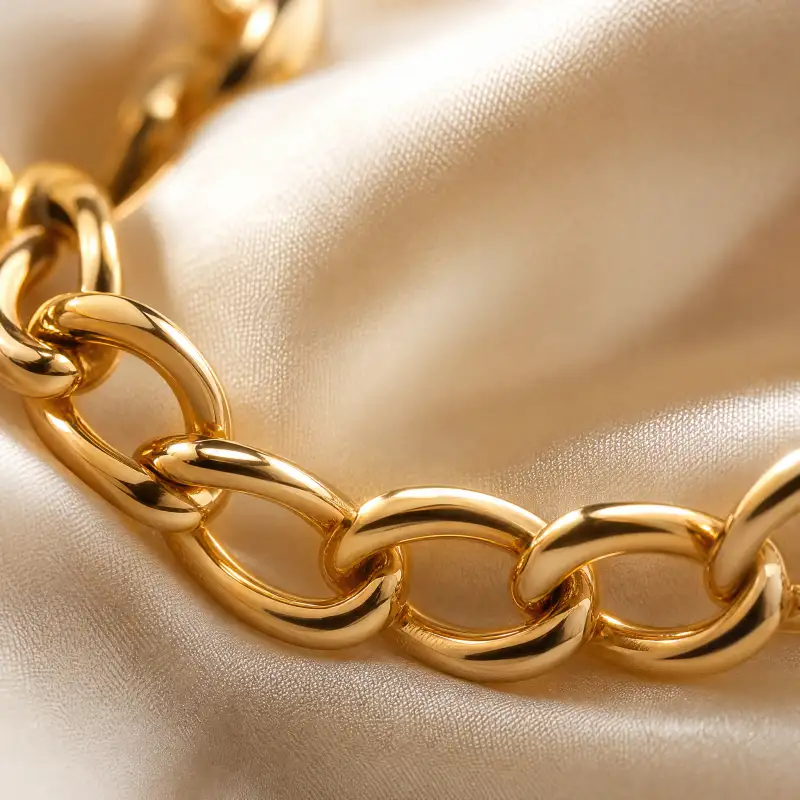
The trade-off is wear. 18K will scratch a little more readily than 14K, and with gold making up 75% of the metal versus 58.3% for 14K, it costs meaningfully more. If your ring lives in a jewelry box except for special occasions, 18K is perfect. If it never leaves your finger, keep reading.
14K Gold: The Everyday Sweet Spot
14K gold is 58.3% gold and 41.7% alloy, and that extra alloy is exactly why it’s the workhorse of American jewelry. The copper, silver, and zinc atoms lock the gold’s crystal structure in place, making the metal noticeably harder and more scratch-resistant than 18K. It’s the karat you can genuinely forget you’re wearing.
Shower with it, sleep in it, wear it to the gym, take it on a road trip — 14K shrugs off the daily abuse that would mark up softer gold within months. It’s the reason demi-fine jewelry, which promises real gold at accessible prices, is built on 14K: the metal is durable enough for 24/7 wear and affordable enough to keep pieces in the few-hundred-dollar range instead of a few thousand.
Color is the one compromise. 14K is lighter than 18K — still unmistakably gold, but slightly cooler and less saturated. Compare it side by side with 18K and you’ll see it; wear it alone and it simply reads as classic gold. And unlike gold plating, that color is solid all the way through. It doesn’t rub off.
Why Gold Comes in Different Colors
Every gold color you’ve ever seen — yellow, rose, white — is alloy engineering. Pure gold is always the same rich yellow; the copper and silver blended into each karat shift the tone. Push the copper ratio up and the metal turns rosy; add more silver, or nickel or palladium for white gold, and it cools toward white. Even within yellow gold, 18K glows warmer than 14K, and 10K reads paler still.
The alloy also matters for sensitive skin. A small percentage of people react to nickel, so if your ears or fingers itch after wearing gold, ask for a nickel-free alloy — most reputable 14K and 18K lines today are made without it.
10K Gold: The Budget Workhorse
At 41.7% gold, 10K sits right at the legal floor for gold in the US market — and it owns that position for good reasons. It’s the hardest karat of all, which makes it ideal for pieces that take real punishment: men’s chains, everyday rings worn during manual work, kids’ jewelry that gets yanked and dropped. It’s also the cheapest entry point into real gold.
The trade-off is color. With more than half the metal being alloy, 10K reads noticeably pale and muted next to 14K or 18K. Some people love the understated look; most people who want that classic warm gold tone will be happier starting at 14K. But if budget and durability lead your priorities, 10K is legitimate gold and will serve you for years.
14K vs 18K Gold: A Head-to-Head Comparison
“Should I buy 14K or 18K?” is the most common gold question we hear, so here’s the full breakdown in one place:
- Gold content: 14K is 58.3% gold; 18K is 75% gold. On gold value alone, 18K is worth more.
- Hardness: 14K is harder and more scratch-resistant. For jewelry worn daily, it holds up better over time.
- Color: 18K is richer and warmer — much closer to pure gold. 14K is lighter but still true gold.
- Stone setting: 18K is the standard for engagement rings and large stones; 14K handles dainty pieces and smaller stones perfectly well.
- Price: 18K costs roughly 30% more in gold content alone, and that gap widens once craftsmanship is factored in.
- Resale: Both are priced by gold content when scrapped or traded, so 18K always resells higher — but jewelry is never a great investment vehicle, as we’ll cover below.
Which Karat Gold Is Best for Everyday Wear?
For jewelry you plan to wear most days — chains, bracelets, earrings, rings — 14K gold is the sweet spot. It’s hard enough to shrug off daily wear, it looks unmistakably like gold, and it prices within reach. That’s the combination the whole demi-fine category is built on.
Here’s how to choose by use case:
- Investment, heirlooms, or wedding gold you’ll store: 24K. Buy by weight, skip intricate designs, and keep it safe.
- Engagement rings and diamond settings: 18K. The color is richer and the prongs hold stones more securely.
- Daily-wear necklaces, bracelets, and earrings: 14K. Maximum durability for the money, and it never has to come off.
- Maximum durability on a budget: 10K. Real gold, the hardest option, the lowest price.
- Sensitive skin: ask for a nickel-free alloy no matter the karat — a small minority of people react to nickel in gold alloys.
One myth to clear up: gold itself never tarnishes, rusts, or changes color. If your gold jewelry looks dull or slightly darker after months of wear, it’s the alloy metals — copper and silver — reacting with sweat, lotion, and air, plus a layer of everyday grime. A professional polish or a gentle at-home cleaning restores the shine. Only plated pieces truly “fade,” when the thin gold layer wears through to the base metal.
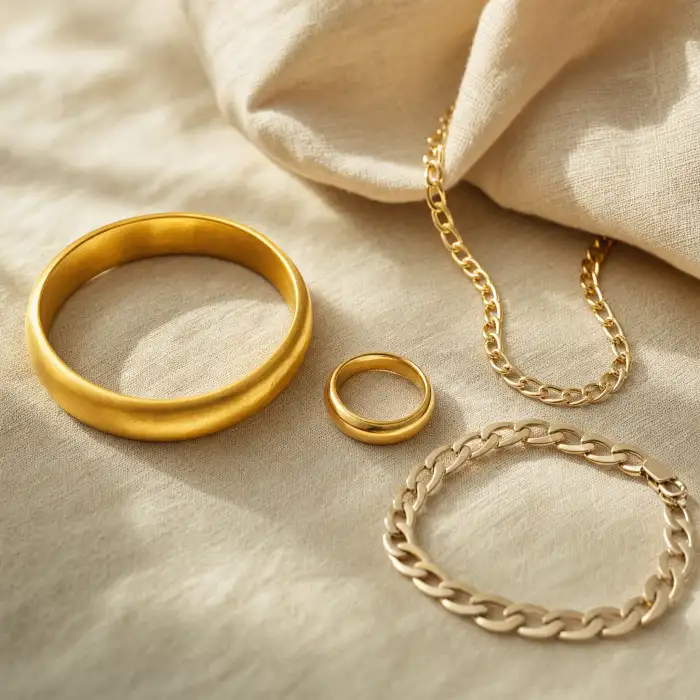
Frequently Asked Questions
Does 14K gold tarnish or fade?
No. Real 14K gold will never tarnish, rust, or fade, because gold itself is chemically stable. The yellow color is the metal’s own color all the way through — not a coating. If your piece looks dull after heavy wear, that’s surface grime plus mild oxidation of the alloy metals, and a polish brings it right back. Jewelry that visibly fades to a different color is gold-plated, not solid gold.
Can you shower with 14K or 18K gold jewelry?
Yes. Both karats handle water without damage. Soap, shampoo, and especially pool chlorine can accelerate surface dulling, so give your pieces a quick wipe with a soft cloth after showering or swimming, and clean them periodically with warm water and mild dish soap. Check out our complete guide to cleaning tarnished and dulled jewelry for the full routine.
Is 18K gold better than 14K gold?
Better at some things, worse at others. 18K is purer, richer in color, and the standard for engagement rings and stone settings. 14K is harder, more scratch-resistant, and noticeably cheaper. If the piece is for special occasions, 18K wins. If it’s for everyday life, 14K is the more practical choice. There’s no universal “better” — only better for your use case.
Is 10K gold worth buying?
For the right purpose, yes. 10K is real gold, the hardest and most affordable option, and it’s a smart pick for chains and rings that take heavy abuse. Just know what you’re trading: with only 41.7% gold, the color is visibly paler and cooler than 14K or 18K. If you want that classic warm gold look, 14K is the better starting point.
Which karat of gold holds its value best?
24K holds the most intrinsic value, followed by 18K, then 14K, then 10K — resale prices are calculated from gold content. But be realistic: when you sell jewelry, the craftsmanship and brand premium you paid are gone. Jewelry is for wearing; if you want pure value retention, buy gold bars or coins instead. For the same reason, store the pieces you’re not wearing properly so they stay in resale condition — our jewelry storage guide covers it.
Why does my gold jewelry sometimes leave a green mark on my skin?
That green smudge isn’t your jewelry breaking down — it’s the copper in the alloy reacting with sweat, lotion, or hand sanitizer on your skin. It’s harmless and washes right off. We explain the chemistry (and when it’s actually a red flag) in why gold jewelry turns skin green.
Ready to find the everyday piece that never has to come off?
Browse Wearlumi’s collection of solid 14K gold jewelry — designed for daily wear, priced for real life.
7 Comments