
Why Jewelry Tarnishes in Storage: The Complete Anti-Tarnish Jewelry Storage Guide
For anti tarnish jewelry storage, You buy a necklace, wear it a few times, and tuck it into a jewelry box for safekeeping. Months later, it comes out gray and dull, and you’re left wondering what went wrong. It wasn’t you. It was the air. This guide explains the chemistry behind tarnish and shows you how to store jewelry so it comes out looking exactly the way you left it.
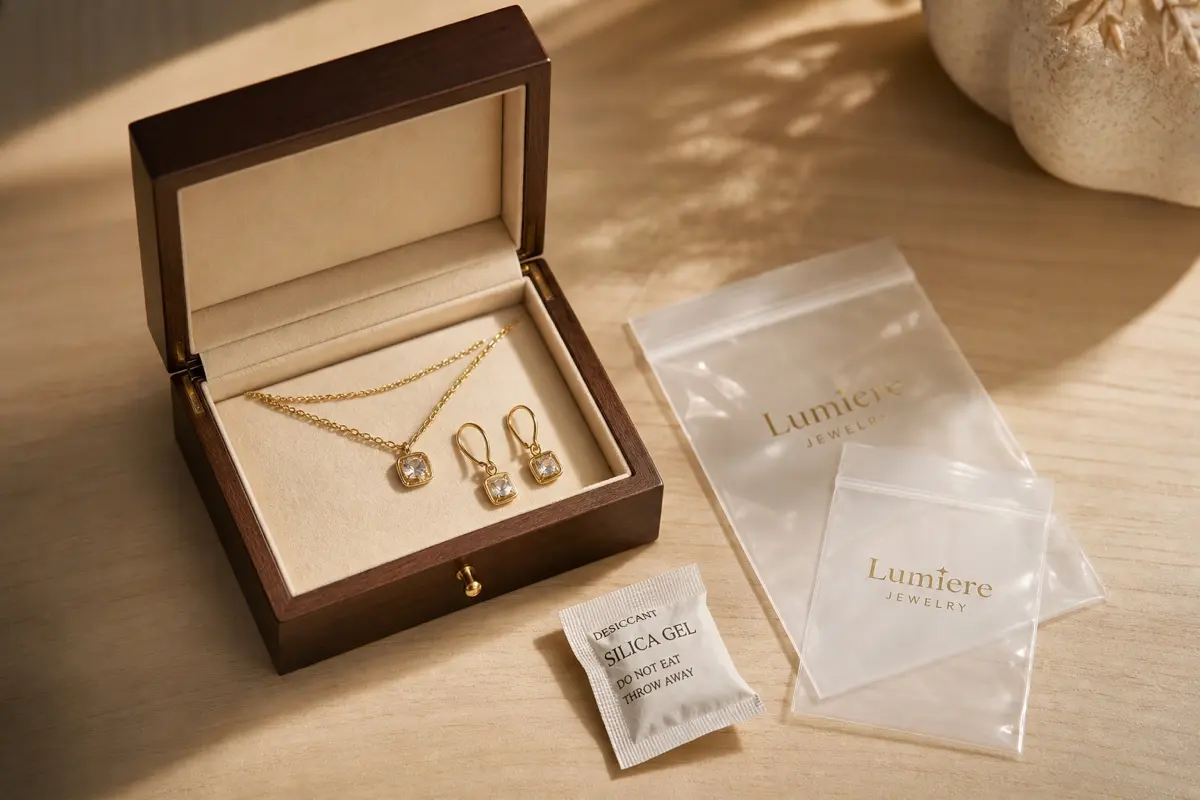
Why Jewelry Tarnishes in the Box
Passive tarnishing is the slow chemical reaction between stored jewelry and airborne moisture, sulfur compounds, and carbon dioxide that darkens silver, greens copper, and dulls gold alloys even when a piece is never worn. It doesn’t need your skin, your sweat, or a single day outdoors. All it needs is air, and your jewelry box is full of it.
So yes, sterling silver does tarnish in storage. The box slows things down compared with daily wear, but it never stops the reaction. The main driver is hydrogen sulfide, a trace gas that’s everywhere indoors: rubber bands, wool sweaters, latex, drywall, and even the eggs you scrambled this morning all release small amounts of it. When sulfur compounds meet silver, they form a silver sulfide film, that familiar gray-black layer you scrub off with a polishing cloth.
Different metals fail in different ways. Copper reacts with oxygen and moisture to form a green patina of copper carbonate. Pure gold barely reacts with anything, which sounds great, until you remember that 14K gold is only 58.3% gold and 18K is 75%. The rest of the alloy is copper and silver, and those metals tarnish right on schedule. Your gold chain doesn’t turn black; it turns hazy and dull, and most people never notice until they hold it next to a brand-new piece.
Humidity is the accelerator. The same necklace tarnishes far faster in a steamy bathroom than in a dry bedroom closet, because these reactions are water-driven. And no, your jewelry box is not airtight. Hinges breathe, seams breathe, and velvet linings actively hold moisture. The box feels protective because it’s pretty and padded, but chemically, it’s doing almost nothing.
Anti Tarnish Jewelry Storage
Here’s the good news: you don’t need a $300 jewelry armoire or a drawer full of anti-tarnish gadgets. Tarnish prevention is physics, not furniture. Control three conditions — dryness, sealing, and light — then add one habit — keeping pieces separated — and the problem mostly disappears. Here’s how to keep jewelry from tarnishing, rule by rule.
Rule 1: Keep It Dry
Moisture is the catalyst that makes every tarnish reaction move. Take water out of the equation and silver sulfide and copper carbonate form so slowly you’ll never notice them. So the first rule of anti-tarnish jewelry storage is the driest possible environment, and the worst possible location is the bathroom, where every hot shower pushes humidity to 80 to 90 percent. The kitchen is a close second: gas stoves and cooking release sulfur compounds straight into the air.
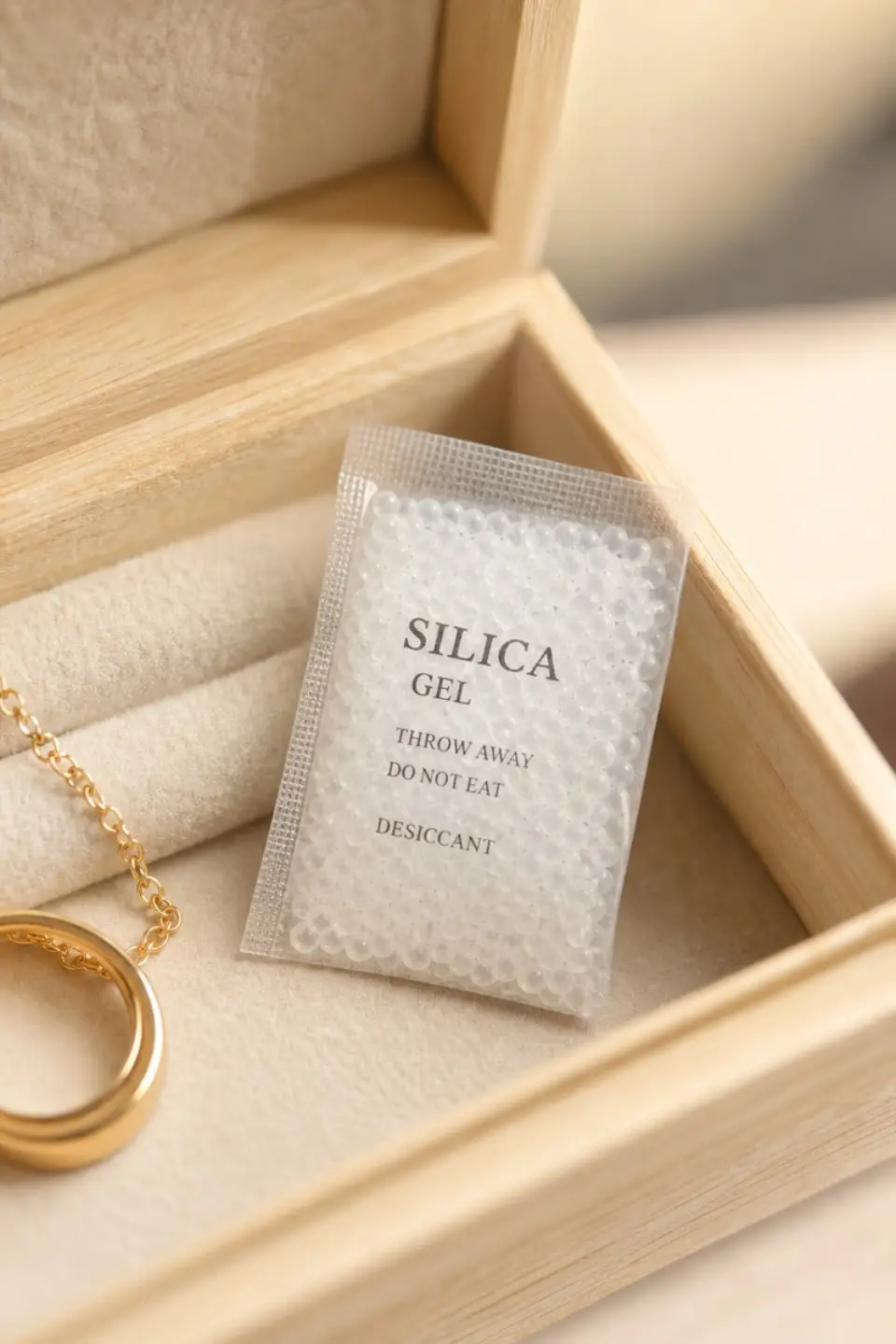
The fix costs pocket change. Those little white packets inside snack bags are silica gel, a desiccant that pulls moisture out of the air. Toss a couple into your jewelry box and swap them out when they feel damp, every month or two. For a more precise setup, buy color-changing silica gel beads, about $10 a pound, which turn pink when saturated and recharge in a 200 to 250 degrees Fahrenheit oven until the color shifts back. One pound lasts most people a year.
Rule 2: Keep It Sealed
Desiccant only absorbs the moisture already inside the box. If the box leaks, and it does, fresh humid air keeps flowing in, and your silica gel just works harder until it gives up. The real fix for how to store jewelry long-term is to stop the air exchange altogether.
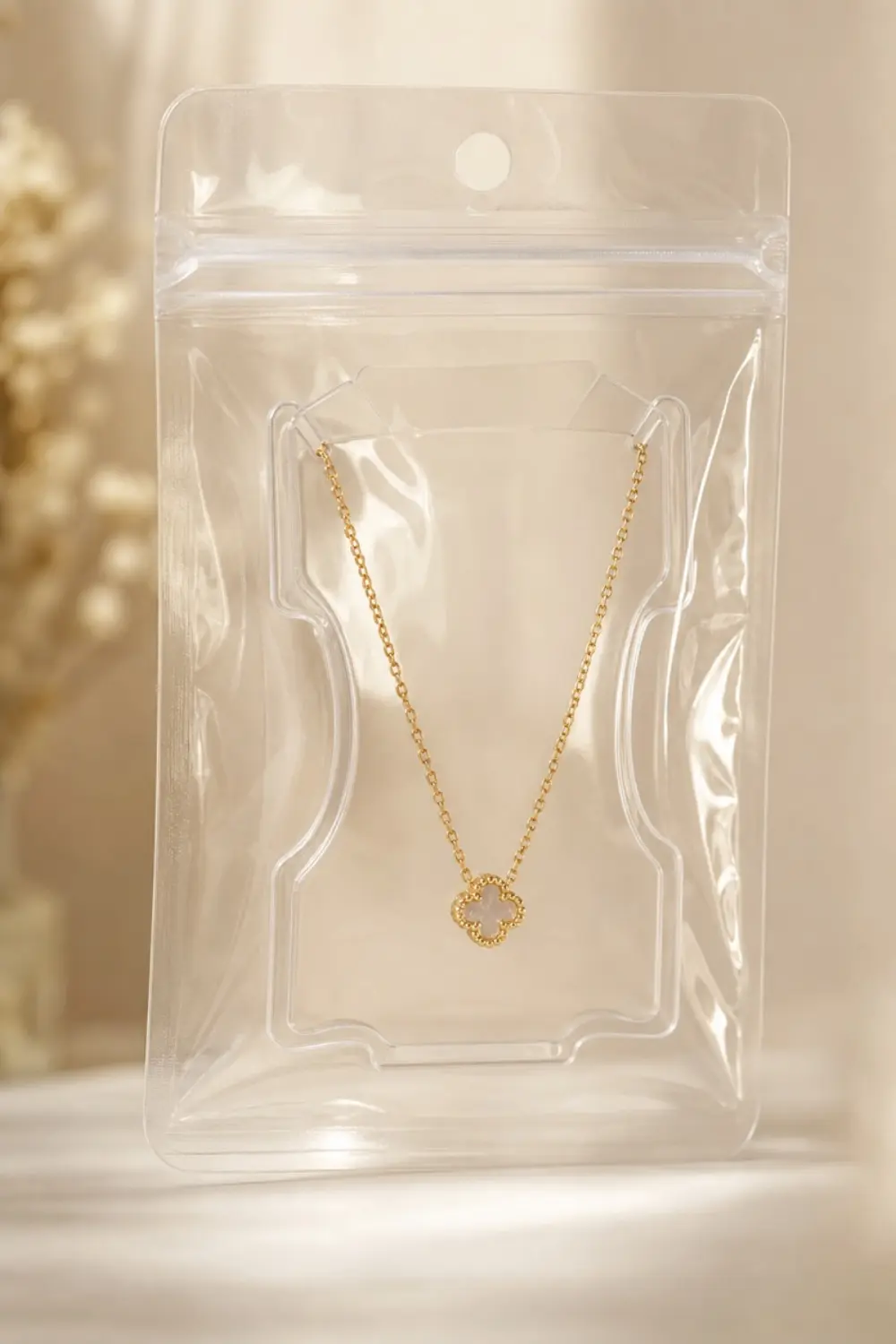
The cheapest reliable tool is a PE film floating-frame seal bag: the thin, soft bags with a small frame inside that suspends your piece in the middle so the metal never touches the bag wall. Slip in one necklace, zip the seal, and the air inside is trapped. PE film is barely permeable, so outside moisture and sulfur compounds can’t get in. The bags cost pennies each and come in packs of 100. For long-term storage, one piece per bag is the best dollar-for-dollar investment you can make.
Compare that with a typical jewelry box. Hinges breathe, seams breathe, velvet linings hold moisture, and the whole thing is designed for access, not containment. Use the box for display and daily rotation, and use sealed bags for everything you won’t wear for a while. Different tools, different jobs.
Rule 3: Keep It in the Dark
Most metals don’t care about light, but the materials around them do. Amethyst and topaz fade with prolonged sun exposure, resin and enamel lose their gloss under UV, and pearls are the most fragile of all: hot, dry, bright conditions crack and yellow the nacre. Store jewelry in a drawer or closet, choose an opaque box over a clear acrylic one, and treat the sunny windowsill as a photo studio, not a storage spot.
Bonus Rule: Give Every Piece Its Own Slot
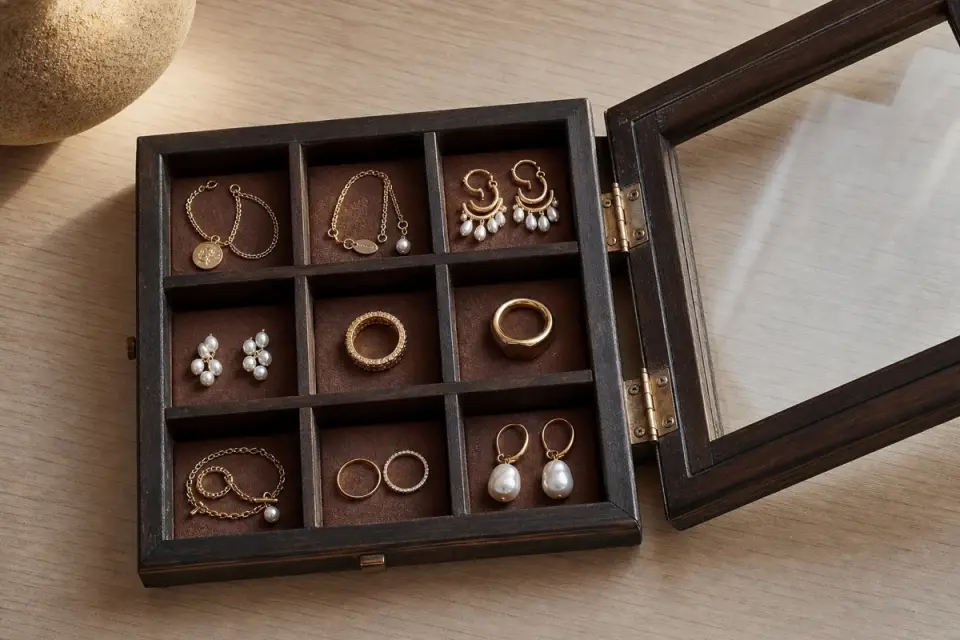
Jewelry also damages itself. On the Mohs hardness scale, diamond is a 10 and sapphire and ruby are 9s, while gold sits around 2.5 to 3.5 and pearls are even softer. Throw a diamond pendant and a gold chain into the same pouch and every pick-up scratches the softer piece. Gold scratches gold, too. The rule is simple: separate by hardness. Gold with gold, gemstones in their own compartments, and pearls in their own soft pouch, always. If you want the full scale and a daily-wear cheat sheet, our Mohs hardness guide walks through it.
Storage by Material: What Happens, and How to Fix It
Every material tarnishes in its own way, and the fix is different for each. Here’s the cheat sheet:
| Material | What tarnish looks like | Main culprit | Home fix |
|---|---|---|---|
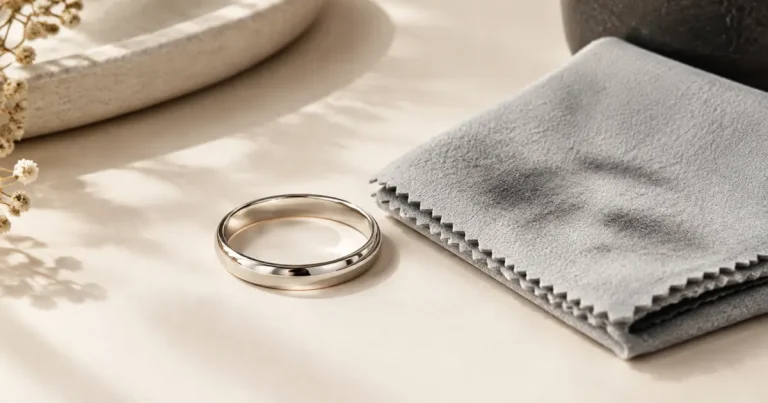
| Sterling silver | Gray-black silver sulfide film | Sulfur compounds in the air | Silver polishing cloth, or a soft cloth with a dab of baking-soda paste, then rinse and dry |
| Copper & brass | Green patina (copper carbonate) | Oxygen + moisture | Lemon juice with a pinch of salt, rub, rinse well, dry completely |
| 14K & 18K gold | Hazy, dull surface (the alloy tarnishes, not the gold) | Sulfur compounds + sweat residue | Warm water, a drop of mild dish soap, a soft brush, then dry |
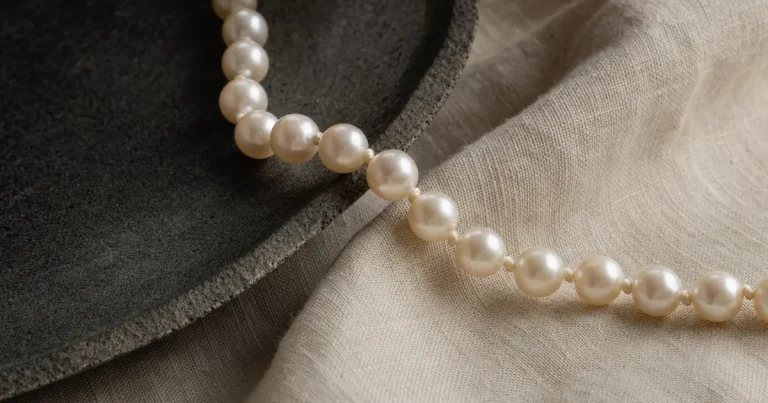
| Pearls | Dull, yellowing, cracking nacre | Dry air + UV light | Wear them regularly; store in a soft pouch away from desiccant |
One note: the home fixes above are safe for solid silver and gold. For pearls, porous stones like turquoise and opal, and anything plated, skip the DIY chemistry and take the piece to a jeweler. Aggressive cleaning can do more damage than the tarnish did.
The Under-$20 Anti-Tarnish Storage Setup
Putting the rules into practice takes four items and about fifteen minutes, and the total cost is under $20. It outperforms a $300 hardwood box at the one job that matters: keeping your jewelry from tarnishing.
- Buy bulk color-changing silica gel (about $8 to $10 per pound). Split it into small breathable pouches, muslin or organza works well, and drop one pouch into each box and drawer. When the beads turn pink, spread them on a baking sheet and dry them in a 200–250°F oven until the color shifts back.
- Order PE film floating-frame seal bags (about $10 for 100). Anything you won’t wear for two weeks or more gets its own bag. One piece per bag, zip the seal, file it in a drawer.
- Set up an opaque, compartmented box for daily rotation. Keep it in a drawer or closet, never the bathroom. The box is your access point; the sealed bags are your archive.
- Quarantine pearls, amber, and opals. These organic materials crack in bone-dry conditions, so keep them in their own small box or soft pouch, away from the silica gel. A little humidity is good for them; sulfur and sunlight are not.
Skip the bathroom counter. One hot shower pushes a bathroom to 80 to 90 percent relative humidity, and that steam works its way into any box. If the bathroom is your only option, seal every piece in a bag before it goes anywhere near the room.
That’s the whole system. A jewelry box is furniture for display; a sealed bag with desiccant is a preservation tool. Buy the first one because it’s beautiful, and use the second one because it works.
Anti-Tarnish Jewelry Storage FAQ
Does sterling silver tarnish in storage?
Yes, just more slowly than when you wear it. Sulfur compounds in indoor air react with silver to form silver sulfide, the gray-black film you know as tarnish, and no ordinary jewelry box is airtight enough to stop the reaction. Storing sterling silver in a sealed bag with a silica gel packet slows it down so much that you can go years between polishings.
What is the best way to store jewelry so it doesn’t tarnish?
Keep it dry, sealed, dark, and separated. In practice: one piece per PE film seal bag, a silica gel pouch in the box, an opaque compartmented box kept in a drawer or closet, and soft materials like pearls stored away from everything else. That combination beats any jewelry box on its own, at any price.
Should I keep jewelry in the bathroom?
No. It’s the worst room in the house for metal. Every hot shower pushes humidity to 80 to 90 percent, and moisture is the catalyst for every tarnish reaction. If the bathroom is your only storage option, put each piece in a sealed bag first and skip the open dish on the counter.
Can you fix tarnished jewelry at home?
Usually. Sterling silver responds to a silver polishing cloth or a gentle paste of baking soda and water, rubbed on and rinsed off. Gold pieces just need warm water, a drop of mild dish soap, and a soft brush. Pearls, opals, and anything plated should go to a jeweler. Our guide to cleaning tarnished jewelry covers each method step by step.
Do anti-tarnish strips and treated cloths actually work?
Partially. Anti-tarnish strips absorb sulfur compounds and do a decent job inside a sealed container, but in a leaky jewelry box they get overwhelmed quickly. Treated polishing cloths remove tarnish that’s already there; they don’t prevent new tarnish. Strips are a nice add-on to a sealed setup, not a replacement for one.
Tarnished or not, your jewelry deserves better than an open box
Start with the under-$20 storage setup above, then browse pieces made for everyday wear

One Comment