
Not Every Gemstone Is Made for Daily Wear: Mohs Hardness Scale & Jewelry Protection Guide
Mastering the mohs hardness scale jewelry standards is essential for choosing pieces that endure everyday life. This comprehensive guide covers which gemstones can handle daily wear, can you shower with pearls, how to care for opals, and what to do about scratched gemstones.
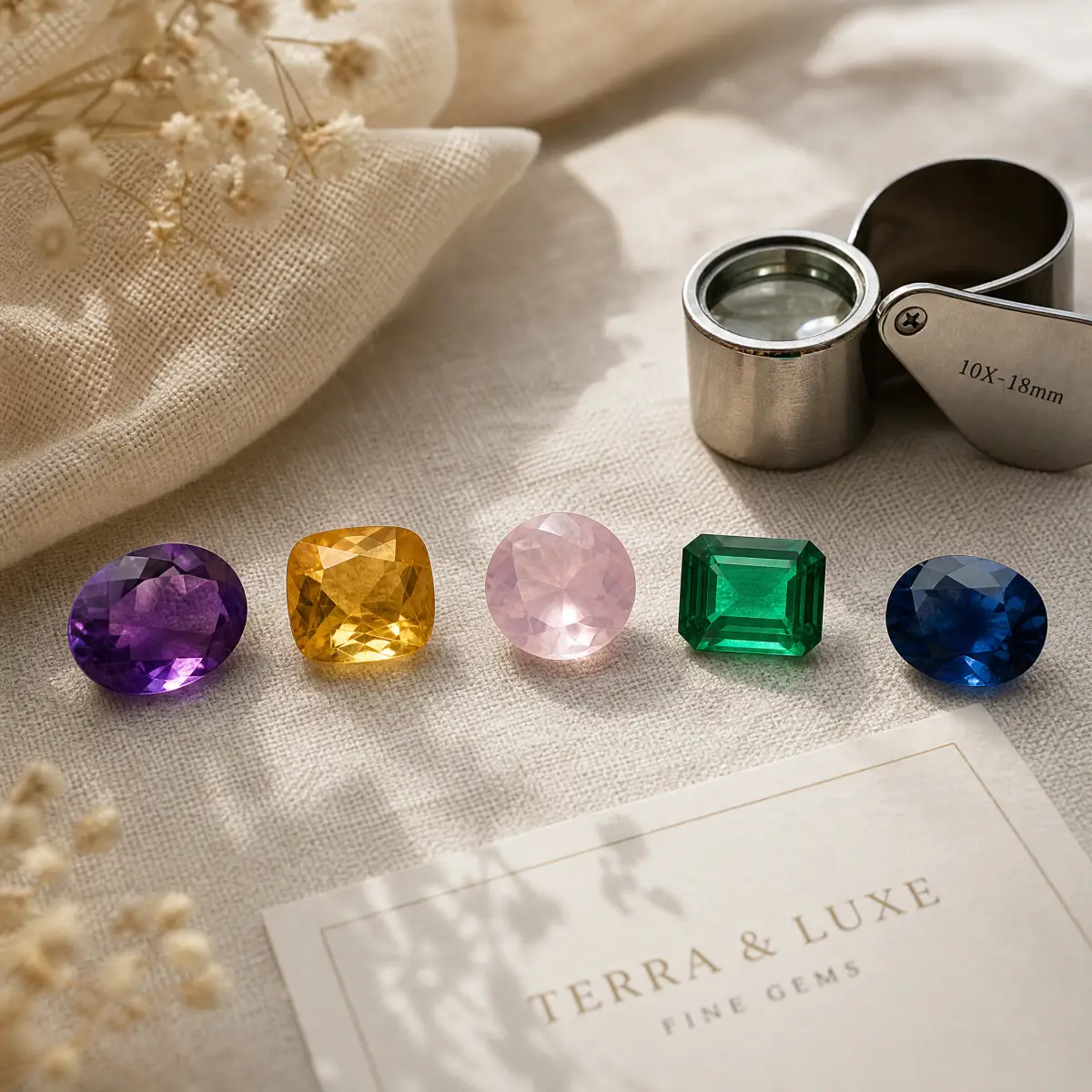
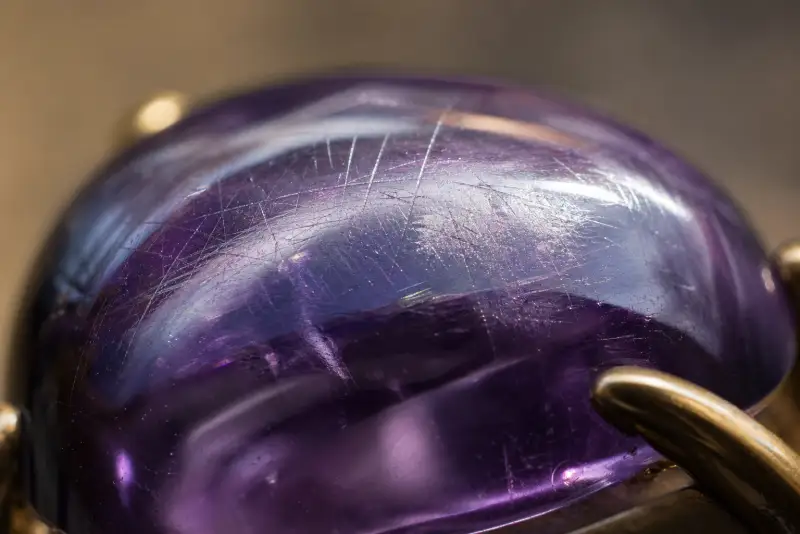
Most jewelry complaints that come back to the counter involve dull stones. A ring worn for six months, its center stone hazed over with fine scratches. A bracelet worn for two years, its beads wearing white where they rub together. Customers ask whether they were sold a fake.
Most of the time, no. The real culprit is smaller than you think. It’s dust. Household dust is full of quartz particles, and quartz sits at 7 on the Mohs hardness scale. That is harder than roughly 80% of gemstones sold today. A stone living against those particles is being sanded, a little at a time, every single day. So before you buy, ask one question first: what is this stone’s Mohs number?
Mohs Hardness Scale Jewelry Care & Daily Wear Rules
The Mohs hardness scale is a relative scratch-resistance scale in which ten standard minerals are ranked from 1 to 10, with harder minerals able to scratch softer ones but not the reverse. It was introduced in 1812 by German mineralogist Friedrich Mohs, and a gemstone’s ranking predicts how well it resists the abrasion of daily life.
On this scale, talc is the softest at 1. Diamond is the hardest at 10. The eight steps between them are gypsum 2, calcite 3, fluorite 4, apatite 5, orthoclase 6, quartz 7, topaz 8, and corundum 9.
The scale is relative, and the gaps between ranks are wildly unequal. The real-world difference between 9 and 10 is far larger than the difference between 1 and 2. Diamond is about four times harder than corundum in absolute terms, while gypsum is only slightly harder than calcite. Saying “an 8 is one notch above a 7” badly understates the gap between topaz and quartz.
A few everyday references are worth memorizing. A fingernail is about 2.5, a copper coin about 3.5, glass runs 5.5 to 6.5, and a steel knife blade is around 5.5. Quartz dust at 7 outranks most of the jewelry you own, which is why dust is the number one source of everyday wear.
Mohs Hardness Chart for Popular Gemstones
The chart below ranks the gemstones you’re most likely to shop for, with a daily-wear verdict for each.
| Mohs Hardness | Reference Mineral | Common Gemstones | Everyday Comparison | Daily-Wear Verdict |
|---|---|---|---|---|
| 10 | Diamond | Diamond | None | Wear daily, but avoid hard impact |
| 9 | Corundum | Ruby, sapphire | None | Wear daily |
| 8 | Topaz | Topaz, spinel | None | Wear daily |
| 7.5 to 8 | None | Emerald | None | Wear daily, but brittle: avoid knocks |
| 7 | Quartz | Amethyst, citrine, agate, rutilated quartz | Dust particles | Wear daily |
| 6.5 to 7.5 | None | Garnet, tourmaline, tanzanite, peridot | None | Wear daily |
| 6.5 to 7 | None | Jadeite | Glass | Wear daily; extremely tough |
| 6 to 6.5 | Orthoclase | Nephrite jade, moonstone, opal | None | Wear with care; avoid friction |
| 5 to 6 | Apatite | Lapis lazuli, turquoise | Knife blade | Wear carefully; never stack |
| 4 to 5.5 | Fluorite | Pearl, coral, malachite | Copper coin | High maintenance; keep away from chemicals |
| 2 to 2.5 | Gypsum | Amber, ivory | Fingernail | Collector’s pieces; wear rarely |
Read the chart once and the takeaway is simple. Seven is the dividing line. Above it, dust can’t hurt your stone. Below it, you need to be careful.
Hardness vs. Toughness: Why Diamonds Can Break
Hardness is only half the story. Gemstones have a second property called toughness, and the two don’t travel together. Hardness measures scratch resistance. Toughness measures resistance to breaking.
Diamond is the classic example. It is the hardest natural substance on Earth, yet its toughness is mediocre. Diamond has perfect cleavage planes, and a single hammer blow can split it along one of them. Diamonds fear impact, not scratches. Plenty of engagement ring stones have been chipped exactly this way, when the wearer assumed the stone was indestructible and dropped it on a countertop.
Jadeite is the reverse. It ranks only 6.5 to 7, unremarkable among gemstones, but its toughness is among the highest of any jewelry stone. A jadeite bangle can bounce off a tile floor; an emerald in the same fall shatters.
So a daily-wear stone needs two numbers. Hardness decides whether it survives dust. Toughness decides whether it survives accidents.
Which Gemstones Can You Wear Every Day?
Weighing hardness and toughness together, everyday gemstones fall into three groups.
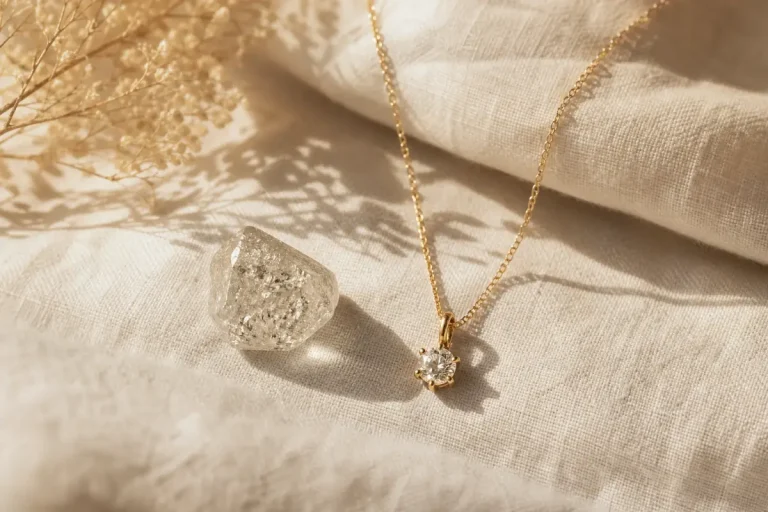
Group one: wear freely. Diamond, ruby, sapphire, topaz, spinel, the quartz family, and garnet all sit at 7 or above. Dust can’t scratch them, and commuting, handwashing, and typing won’t hurt them. Emerald is a half-step exception. Its hardness qualifies, but internal fractures make it brittle, so take it off for housework.
Group two: wear normally, mind the friction. Jadeite, nephrite, tourmaline, tanzanite, moonstone, and opal land here, at 5.5 to 7. The hardest quartz particles in dust can leave faint marks over time. These stones are fine worn alone, just don’t let them rub against anything harder. Opal needs its own routine, covered below.
Group three: high maintenance. Pearls, coral, amber, malachite, lapis lazuli, and turquoise all rank below 6. A fingernail or a copper coin can damage them. Their biggest enemy isn’t even scratching. It’s water and chemicals, so they come off before showers and handwashing.
Stacking has one simple rule. If two pieces of jewelry differ by more than one point on the Mohs scale, don’t wear them touching. The harder piece will slowly grind the softer one away. The classic accident is a diamond bracelet next to a pearl one, and the pearls come out matte within months.
Can You Shower With Pearls?
No. Showering in pearls is one of the fastest ways to ruin them, even in plain water.
Pearls are organic gemstones, ranking just 2.5 to 4.5 on the Mohs scale. Their nacre is mostly calcium carbonate, and it reacts badly to acids and bases alike. Soap, shampoo, and body wash are all slightly alkaline or acidic, and each exposure slowly dissolves the luster off the surface. Chlorine in tap water attacks pearls too, dulling their signature glow.
The silk thread is even more fragile than the nacre. Wet silk swells and rots, and moisture trapped inside the drill holes can mildew the bead. A pearl necklace worn into the shower regularly will last two or three years instead of decades.
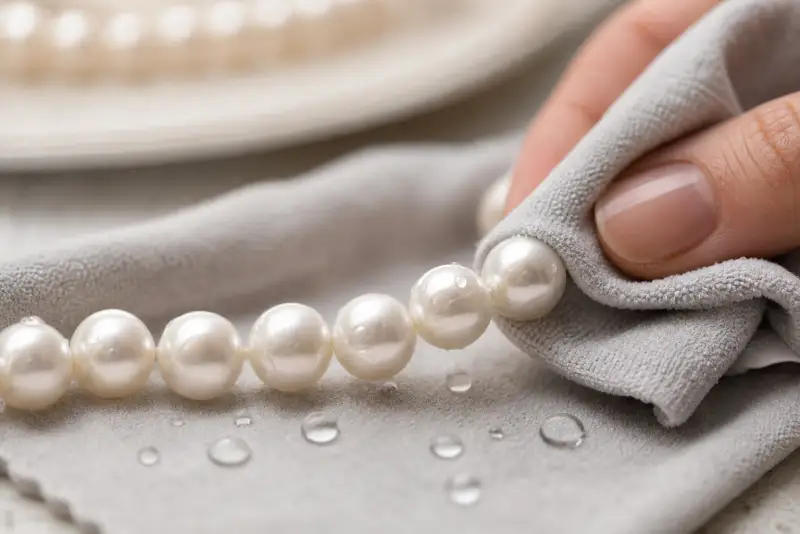
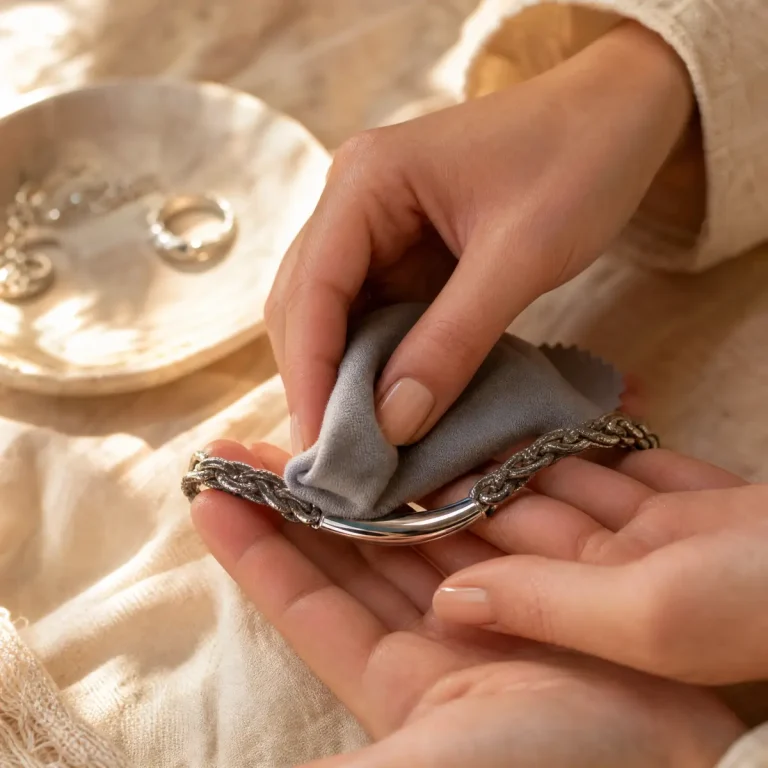
The right routine is simple. Pearls go on last before you leave the house and come off first when you get home. Wipe them with a soft cloth to remove sweat and cosmetics, then store them in their own pouch. Keep them out of four situations: showering, swimming, working out, and cooking.
How to Care for Opals
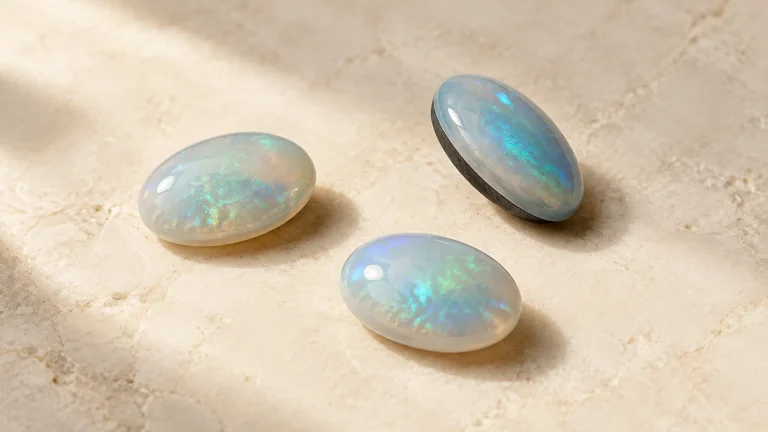
Opals have a reputation for being fussy, and the chemistry backs it up. Opal contains water, typically 3% to 21% by weight, held inside a porous microstructure. That creates three problems.
The first is dryness. An opal stored in a dry environment loses water over time, and the surface develops a fine web of cracks called crazing. Forced-air heating in winter, or long stretches inside a safe, are the high-risk scenarios.
The second is heat and sun. High temperatures and direct sunlight accelerate water loss and can fade the play-of-color. Opals don’t go in saunas, and they don’t sit on car dashboards in summer.
The third is chemicals. Perfume, hairspray, and hand sanitizer seeping into an opal’s pores leave stains that can’t be cleaned out. The order of your morning routine matters: cosmetics first, jewelry last.
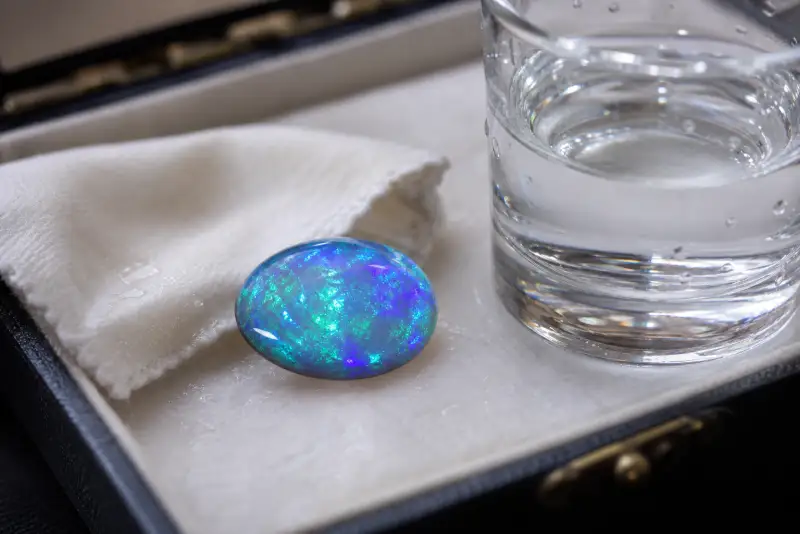
Opal care comes down to one rule. Keep the stone in a stable, slightly humid environment. Store it wrapped in a barely damp cloth, or sealed in a box with a small glass of water. Rinse it gently with plain water from time to time. Never use an ultrasonic cleaner; the vibration can crack a porous stone.
How to Fix a Scratched Gemstone
Already scratched? The fix depends on how deep the damage goes.
Hazing and fine scratches are surface wear. A professional repolish restores most gemstones, and local jewelers typically charge $25 to $100 depending on hardness, with harder stones taking longer on the wheel. Rubies, sapphires, and diamonds fall on the higher end; organic stones cost less.
A chipped edge is structural damage. Small chips can be recut, trimming the damaged edge at the cost of a little carat weight. Large breaks are usually permanent, especially in diamond. At that point the options are accepting the chip or resetting the stone so a prong covers it.
Don’t polish gemstones with toothpaste. Toothpaste contains abrasives, and on a soft stone those abrasives are just new scratches. The toothpaste trick only half-works on a few hard gemstones, and on pearls or opals it’s pure destruction.
Prevention is always cheaper than repair. The simplest habit is taking jewelry off before bed and putting each piece back in its own pouch or compartment. The scratches your jewelry picks up while jumbled together in a box do more damage than a full day of wear.
Daily Wear: What Comes Off and When
Walk through a normal week, situation by situation.
- Cooking and dishes. Dish soap and grease attack organic gemstones, and pots and pans knock rings around. Everything comes off.
- Gym and exercise. Sweat is mildly acidic, weights are hard, and rings can pinch fingers. Take it off.
- Swimming and hot tubs. Pool chlorine and spa minerals are disasters for pearls, opals, and turquoise. Take it off.
- Beach days. Sand is quartz, hardness 7, and it will frost most gemstones. Leave necklaces and bracelets at home.
- Perfume and cosmetics. Apply first, wait five minutes for chemicals to evaporate, then put jewelry on.
- Handwashing. Stones above 7 tolerate occasional soap, just rinse and dry. For pearls and opals, take them off first.
- Sleep. Side sleepers should remove rings and earrings so they don’t bend against the mattress.
- Storage. One pouch or compartment per piece. Hard and soft never share a slot.
The list looks strict, but it collapses into two habits. Hard stones need protection from impact, soft stones need protection from chemicals, and both need good storage.
Frequently Asked Questions
Can you shower with pearls?
No. Soap, shampoo, and chlorine in tap water erode a pearl’s nacre, and silk thread absorbs water and rots. Remove pearls before showering, wipe them with a soft cloth, and store them separately.
How do you fix a scratched gemstone?
Superficial scratches can be removed with professional repolishing, which restores most gemstones. Chipped edges require recutting, which costs a small amount of carat weight. Prevention is cheaper: store pieces separately and avoid stacking jewelry.
How do you care for an opal?
Opals fear dryness, heat, and chemicals. Store them wrapped in a slightly damp cloth or in a sealed box with a small glass of water. Never use ultrasonic cleaners, and keep perfume and hand sanitizer away from the stone.
Is a Mohs hardness of 7 enough for daily wear?
Hardness handles scratches, but toughness handles impact. Diamond ranks 10 on the Mohs scale yet chips when struck. Even gemstones above 7 should avoid hard knocks, especially near prongs and exposed edges.
What are the 10 levels of the Mohs scale?
Talc 1, gypsum 2, calcite 3, fluorite 4, apatite 5, orthoclase 6, quartz 7, topaz 8, corundum 9, diamond 10. A fingernail is about 2.5, glass is 5.5 to 6.5, and the quartz particles in household dust sit at 7.
The Bottom Line
Back to the original question: can this gemstone be worn every day? The Mohs scale has the answer. Above 7, the stone will happily live your life with you. Below 6, it deserves a little more thought. Wearlumi’s demi-fine pieces are designed around daily-wear realities, with hard-wearing stones and a storage pouch in every box, so the jewelry you love spends more time on you and less time in a drawer. Check the hardness before you buy, and match the stone to the life you actually live.
Understand the stone, then choose the stone
Wearlumi jewelry care guides, for pieces made to be worn every day
3 Comments