What Are Recycled Gold and Lab-Grown Diamonds? Sustainable Jewelry, Explained
Recycled gold and lab grown diamonds is the focus of this practical guide. Recycled gold, lab-grown diamonds, and the honest math behind sustainable jewelry: what these materials are, how they’re made, and what to ask before you buy.

Two questions keep showing up at jewelry counters these days. Where did the gold come from? And where did the diamond come from?
For a long time the answer was simple. Out of the ground. Then Catbird, a Brooklyn shop founded in 2004, put a line on its website saying every piece is made with more than 95% recycled gold. Astrid & Miyu, a London brand, went further and renamed its materials from recycled to repurposed, explaining that gold is almost never waste. This guide explains what recycled metals and lab-grown diamonds actually are, the technology behind them, and the honest math of shopping greener.
Recycled Gold And Lab Grown Diamonds
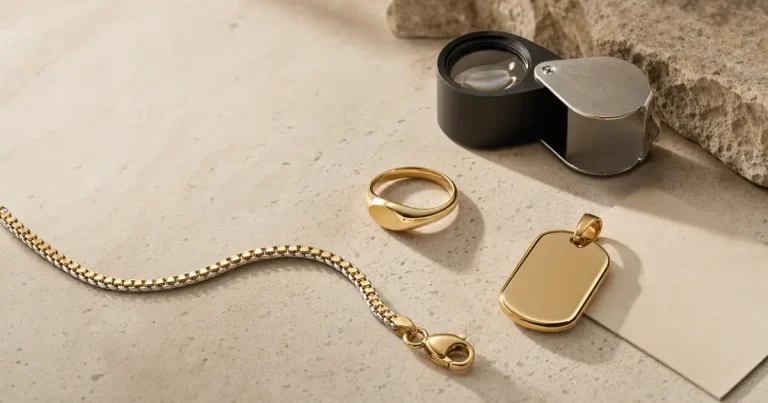
Recycled gold is gold recovered from old jewelry, electronics, and industrial scrap, refined back to standard purity, and reused in new jewelry, with the same chemical and physical properties as newly mined gold.
Gold and silver have a trait most materials don’t. They barely wear out. A ring worn for twenty years can be melted and recast without losing weight or purity. Refining removes alloying metals and brings the gold back to 999 fineness; from there, making a new piece is identical to working with mined gold. The secondhand worry doesn’t apply. Refined recycled gold is indistinguishable from mined gold, and no jeweler can tell them apart.
The scale is bigger than most people assume. Roughly a third of the world’s gold supply comes from recycling, and recycled silver accounts for close to 30% of supply. Mining, per dollar of product, is one of the most environmentally intense industries on earth. Industry research estimates that producing a single gram of gold generates roughly 20 tons of waste rock, plus heavy water and chemical use. Choosing recycled metal skips that whole chain of disruption, not just one gram of metal.
Two brands built their identity on this. Catbird, born in Williamsburg, Brooklyn in 2004, states on its site that over 95% of its gold is recycled and that its giving fund has donated $1.4 million and counting. Astrid & Miyu, in its 2026 impact report, shifted its language from recycled to repurposed, arguing that gold is almost never waste and that previously mined gold turned into new jewelry is better described as repurposing. The change tracks the Responsible Jewellery Council’s updated definition of recycled metals.

Why the Word “Repurposed” Is Catching On
The recycled-versus-repurposed debate sounds like marketing, but it carries real meaning. Recycled suggests waste that got a second life. Most scrap gold isn’t waste at all. It’s yesterday’s jewelry, coins, and electronics, melted and refined back into circulation. The RJC, the jewelry industry’s main responsible-sourcing body, has been tightening what counts as recycled metal so brands can’t inflate claims. Astrid & Miyu made the switch to match that standard, and more brands are expected to follow.
For you as a shopper, the label matters less than the disclosure. Whether a brand says recycled, repurposed, or reclaimed, the useful question is the same. Can they tell you where the metal came from?
What Is a Lab-Grown Diamond?
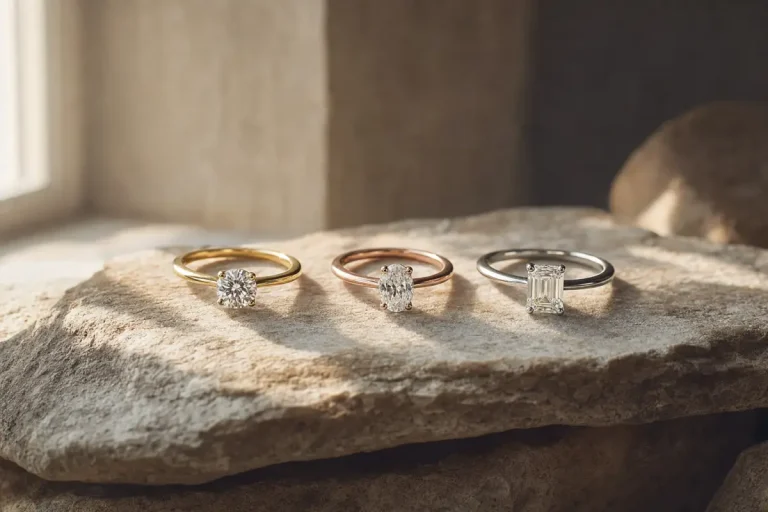
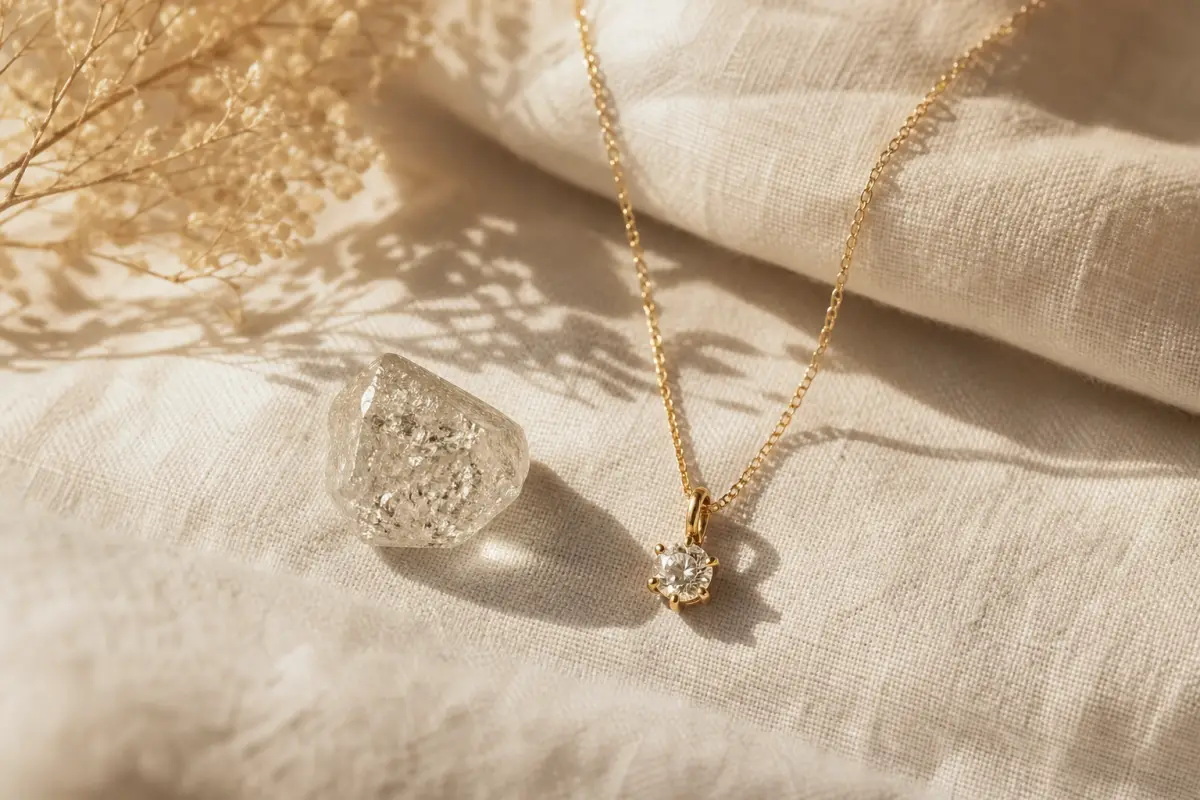
A lab-grown diamond is a real diamond produced in a controlled industrial process rather than formed underground, with the same pure-carbon crystal structure and the same chemical, physical, and optical properties as a natural diamond.
First, clear up the common confusion. A lab-grown diamond is not a simulant. Moissanite and cubic zirconia look similar but are different materials. A lab-grown diamond is diamond, full stop, grown in a factory instead of a hundred miles underground.
The first commercially successful synthesis came from General Electric in 1954. Two methods dominate today. HPHT mimics the mantle, using presses weighing hundreds of tons to squeeze carbon at about 1,500°C and extreme pressure until crystals form. CVD grows diamond layer by layer from carbon-rich gas in a low-pressure chamber, more like planting a crop than forging metal. Both produce gem-quality stones, and by 2025 the industry had grown rough crystals up to 125 carats.
Gemmologists treat the two as equals. Hardness, refractive index, and fire are identical. The 4Cs apply to both, and labs like GIA and IGI issue full grading certificates for lab-grown stones, clearly marked as laboratory-grown. Instruments can tell a lab-grown diamond from a natural one; the eye can’t. In 2018, the FTC updated its jewelry guides and dropped natural from the definition of diamond, so lab-grown stones may legally be called diamonds as long as their origin is disclosed.
Price is where shoppers feel the difference. A comparable 1-carat stone typically retails at 20% to 40% of the price of a natural diamond. The gap comes from the supply chain. Mined diamonds travel from the mine through sorting and multiple middlemen. Lab-grown stones move from the factory to the brand in a few steps.
Natural vs. Lab-Grown Diamond: Side by Side
Put the two next to each other and the differences are easier to see.
| Natural Diamond | Lab-Grown Diamond | |
|---|---|---|
| Origin | Formed 100+ miles underground over billions of years | Grown in a factory in weeks |
| Composition | Pure carbon crystal | Identical pure carbon crystal |
| Journey | Mined, sorted, traded through a long chain | HPHT or CVD chamber, straight to the brand |
| Grading | GIA, IGI, and other labs | Same labs, certificate marked laboratory-grown |
| Price | Benchmark pricing | Typically 20% to 40% of natural |
| Resale | Established resale market | Market still young, steeper depreciation |
| Footprint | Mining, tailings, land and water impact | Factory energy use, no mining |

Mined vs. Recycled Metal: Side by Side
The same side-by-side logic applies to the metal in your jewelry.
| Mined Gold | Recycled Gold | |
|---|---|---|
| Source | Extracted from ore | Old jewelry, electronics, industrial scrap |
| Purity | Refined to standard purity | Refined to the same standard purity |
| Supply share | Roughly two-thirds of global supply | Roughly one-third of global supply |
| Footprint | Per-gram waste rock, water, chemicals | Collection and refining energy, no new mining |
The Honest Math of Green Jewelry
Let’s keep the ledger straight. Recycled metal is not carbon-free. Collection, shipping, and refining all use energy. Lab-grown diamonds run on electricity, and a crystal spends weeks inside a growth chamber. Sustainable has no legal definition in the US, so some brands overstate what these materials deliver.
The other side of the ledger is clear, though. Recycled metal avoids new mining entirely. Lab-grown diamonds bypass mining, tailings, and conflict-metal risk. The debate over exact footprints will continue; the direction won’t. Both choices mean less digging for the same jewelry, and that is the core of what sustainable jewelry is trying to do.
How to Shop Sustainable Jewelry
Ask three questions before you buy.
- Where does the metal come from? A brand that openly says recycled or repurposed gold and silver has made a supply-chain decision. Vague claims like eco-friendly or green gold are worth a follow-up question.
- Who verifies it? Look for third-party backing: RJC membership, SCS recycled-content certification, or a published materials policy. Certification beats self-description.
- What does the diamond certificate say? A real lab-grown diamond comes with a GIA or IGI certificate marked laboratory-grown. No certificate, no clarity.
Set your resale expectations too. Lab-grown diamonds wear and sparkle like natural ones, but the resale market is young and depreciation is steeper. If the stone is about the wearing, not the reselling, that’s exactly the trade a growing number of buyers are making.
Frequently Asked Questions
What is recycled gold?
Recycled gold is gold recovered from old jewelry, electronics, and industrial scrap, refined to standard purity, and reused in new pieces. Its properties are identical to newly mined gold.
Is recycled gold or recycled silver lower quality?
No. Refining brings recovered metal back to the same standard purity as mined metal. Refined recycled gold and silver are chemically and physically identical to new.
Are lab-grown diamonds real diamonds?
Yes. Lab-grown diamonds are pure carbon with the same crystal structure, hardness, and optical properties as natural diamonds. Since 2018, the FTC’s jewelry guides allow them to be called diamonds when their origin is disclosed.
Why are lab-grown diamonds cheaper than natural diamonds?
Supply chain, not quality. Mined diamonds pass through mining, sorting, and multiple middlemen; lab-grown stones travel from factory to brand in a few steps, so retail prices typically land at 20% to 40% of a comparable natural stone.
Do lab-grown diamonds hold their value?
Less than natural diamonds today. The resale market for lab-grown stones is still young, and depreciation is steeper. Buy them for how they look and wear, not as an investment.
How can I tell if jewelry is truly sustainable?
Ask where the metal came from, check for third-party verification like RJC membership or SCS recycled-content certification, and confirm lab-grown stones carry a GIA or IGI certificate. Sustainability has no legal definition, so specific claims beat vague ones.
Related reading
The Bottom Line
Back to the two questions at the counter. Where did the gold come from? Where did the diamond come from? Both now have an answer beyond out of the ground. Recycled metal skips the mine; lab-grown diamonds skip the mine entirely. Neither is a perfect zero, and honest brands will say so. What they offer is less digging, full traceability, and jewelry that doesn’t ask the planet to pay for it twice. Wearlumi designs demi-fine pieces for everyday wear, and we’re building our materials story the same way we build the jewelry, with care and transparency. Ask the questions, read the labels, and buy what you can stand behind.
Shop jewelry made to be worn every day
Wearlumi jewelry care guides, for pieces made to be worn every day