Why White Gold Turns Yellow: Rhodium Plating Explained
Learn why white gold turns yellow, how rhodium plating wears, when to replate, and how white gold compares with platinum for care.

How jewelry materials are made: construction, weight, and the engineering behind everyday wear.
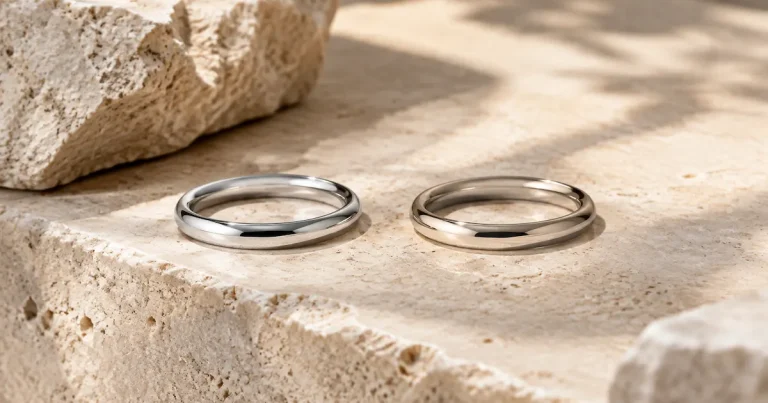
Learn why white gold turns yellow, how rhodium plating wears, when to replate, and how white gold compares with platinum for care.
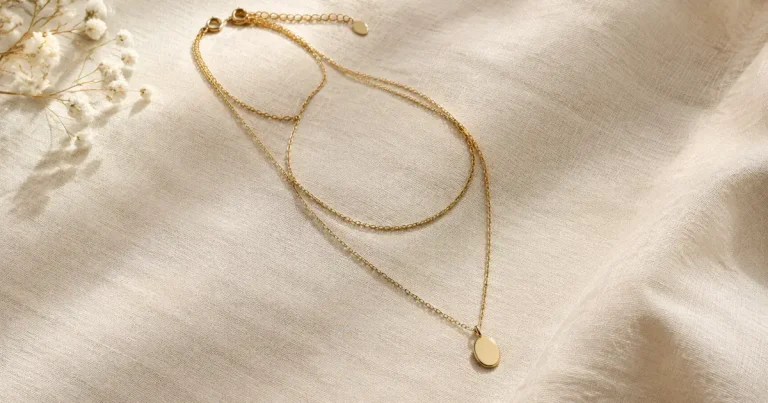
Learn why layered necklaces tangle and how to reduce twists with practical length spacing, pendant choices, separator checks, and separate storage.

An editorial podcast-style guide to earring weight, center of gravity, movement, and disc-back support.
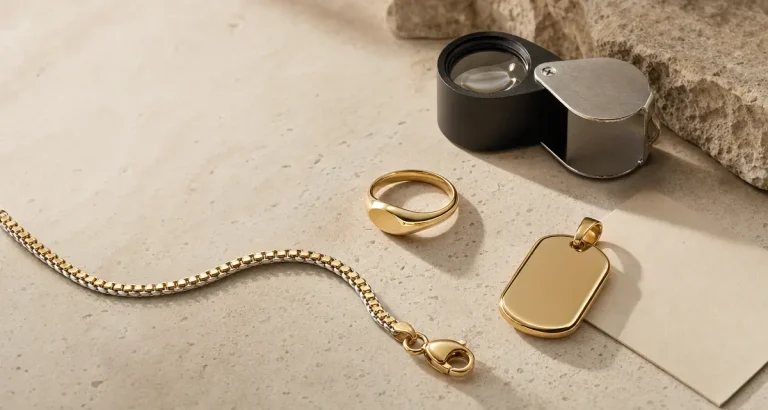
A clear, evidence-led breakdown of solid gold, vermeil, conventional plating, 316L steel, PVD coatings, jewelry labels, durability, and the costs behind the price.
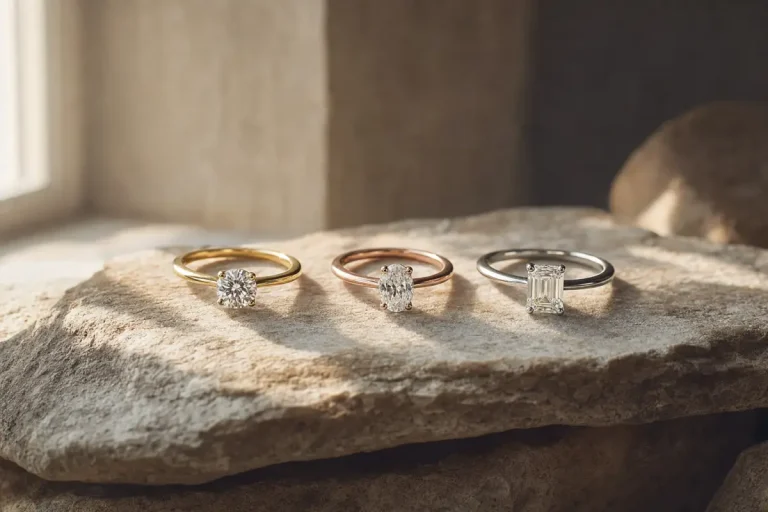
An honest physics comparison of lab-grown diamond, moissanite, and cubic zirconia: hardness, refractive index, thermal testers, and price bands — plus a simple guide to which stone fits your wear habits and budget.

How brass, stainless steel, and titanium compare as jewelry base metals: weight, tarnish resistance, skin sensitivity, water tolerance — and what plating hides underneath.

The mechanical physics behind why cable and paperclip chains survive hard pulls while snake and herringbone chains kink permanently – plus a repair guide for what can be re-welded and what cannot.
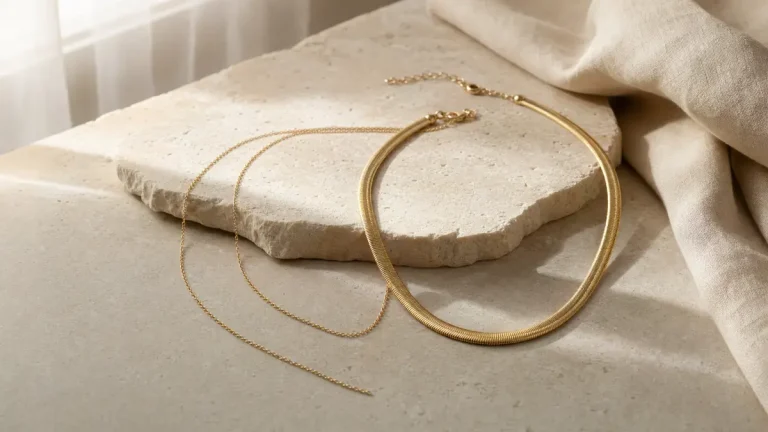
A thin necklace chain is not automatically fragile. Learn why solid construction, cable links, connection points, and daily pulling habits matter more than visual width.
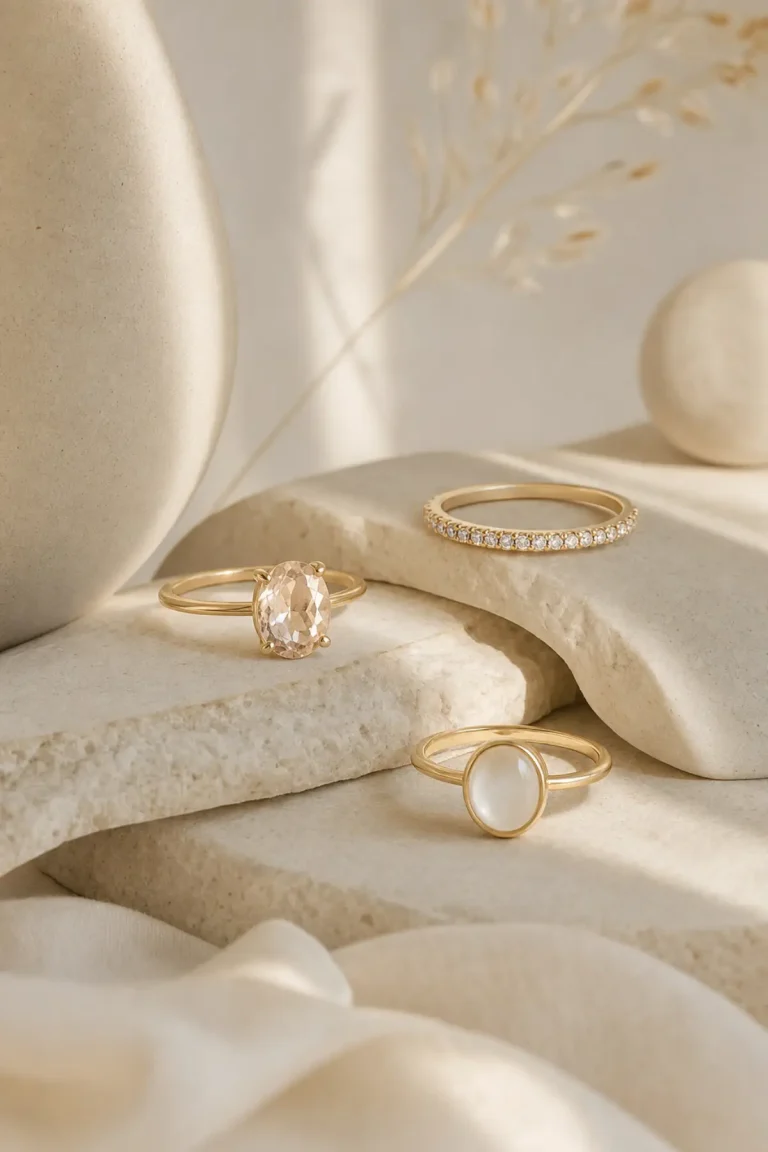
Compare prong, bezel, and pavé settings by edge protection, snag risk, light exposure, maintenance, and the safest response to a loose or missing stone.

Gold and white gold stack beautifully together — but hardness differences mean fine scratches in high-friction spots. The honest physics of mixed metals, rhodium plating life, and Wearlumi’s scratch-proof stacking formula.