Ethical Jewelry Sourcing: Beyond Disposable Fashion
Ethical jewelry sourcing begins long before a finished piece reaches your jewelry box. It lives in the alloy specification, the pressure of a clasp, the balance of a pendant, the way a factory handles wastewater, and the decision to make fewer pieces before demand is known.
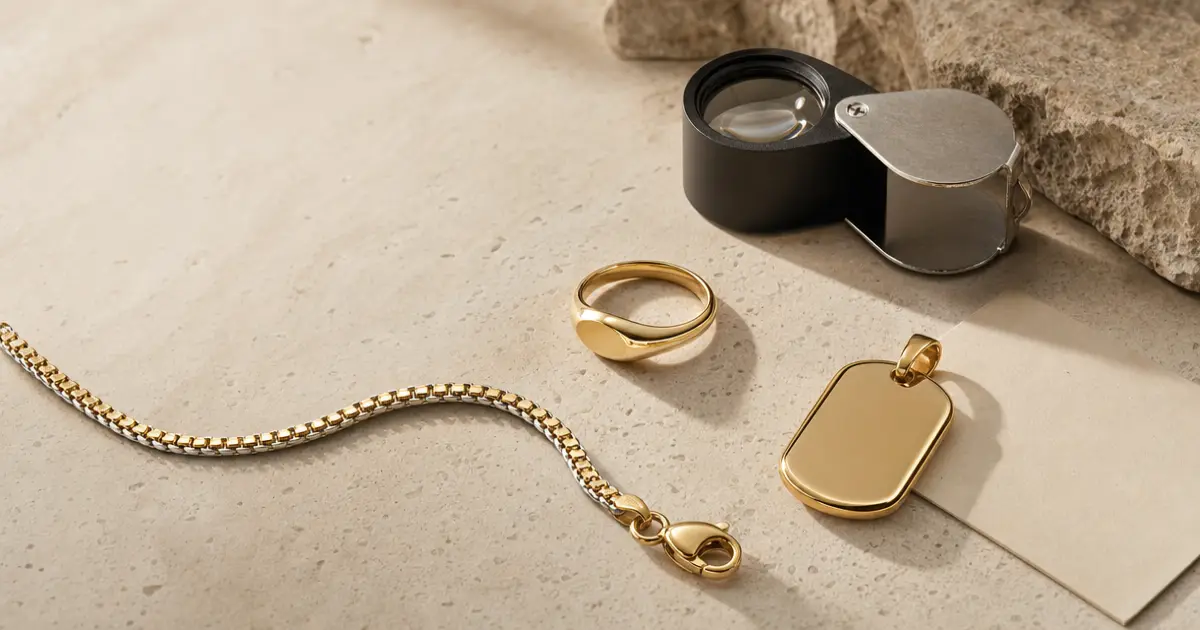
What makes a modern piece of jewelry responsible? The easy answer is a recycled-metal label or a vague promise to be “conscious.” The more useful answer is harder. A responsible piece should respect the person wearing it, the people making it, the materials passing through the supply chain, and the resources required to bring it into the world.
This episode moves from a sketch to the realities of all-day wear. We look at nickel release without fearmongering, examine the invisible ergonomics behind clasps and ring interiors, open up Wearlumi’s internal wear-scenario testing, and ask why labor standards and pollution controls belong in a product’s price.
A note on scope: price and country of origin do not, by themselves, determine whether jewelry is safe or responsibly made. Specific materials, construction, test methods, supplier controls, and disclosures are what can be evaluated.
Ethical Jewelry Sourcing Starts with the Wearer
A low price does not erase a cost. It can move that cost somewhere less visible: into a coating that wears too quickly, a finding that pinches, an untreated waste stream, rushed labor, or inventory that never finds an owner. That does not mean every inexpensive piece is unsafe, or that every expensive one is responsible. It means the price tag cannot answer the ethical question by itself.
For jewelry that sits against the body, one practical question is nickel release. The European Chemicals Agency identifies nickel and nickel compounds as skin sensitizers. In a person who has become sensitized, later exposure can cause allergic contact dermatitis. European rules for jewelry and other items in direct, prolonged contact with skin use a nickel-release threshold of 0.5 micrograms per square centimeter per week; piercing posts have a tighter threshold.
This is why “contains nickel,” “nickel-free,” and “tested for nickel release” are not interchangeable phrases. An alloy composition tells you what is in the material. A release test addresses what can migrate from a finished surface under defined conditions. Coating durability matters because the surface that touches the body can change with wear.
Good disclosure therefore goes beyond a generic “hypoallergenic” promise. It should identify the base metal where possible, distinguish posts and findings from decorative bodies, explain the finish, and state what was tested without implying that any piece can prevent an allergic response.
Health boundary: jewelry information cannot diagnose a rash. If redness, itching, swelling, blistering, or persistent irritation develops, stop wearing the item and seek advice from a qualified healthcare professional.
Why “Buy Less, Wear Longer” Defines Ethical Jewelry Sourcing
The most meaningful challenge to disposable fashion through ethical jewelry sourcing is not a prettier recycling claim; it is making a piece someone chooses repeatedly.
The Ellen MacArthur Foundation’s circular-fashion work frames durability and increased use as alternatives to a linear take-make-waste model. Jewelry is a different product category, so clothing statistics should not be pasted onto it. The principle still travels well: use is where a product begins to earn the resources invested in it.
For a buyer, an everyday piece has to pass a more demanding test than “does it photograph well?” It must work across real outfits, remain comfortable after the novelty wears off, tolerate maintenance, and have a form worth returning to. That changes the purchase question from “Is this trending?” to “Will this still belong in my life a year from now?”
| Disposable question | Long-wear question |
|---|---|
| Does it look striking in one photo? | Does it work across at least three real parts of my week? |
| Is it cheap enough to try? | Are the material, construction, and care limits clearly disclosed? |
| Is it the current silhouette? | Can I wear it for hours without pinching, pulling, or constant adjustment? |
| Can I replace it later? | Can it be maintained, inspected, or repaired when normal wear appears? |
That is also a brand discipline. A company that wants long-term trust has to resist treating every visual idea as a product launch. Some concepts belong in a sketchbook. Others need more rounds of fit testing. A smaller assortment of wearable designs can say more about a point of view than a constant stream of short-lived novelty.
The Ergonomics a 3D Render Cannot Prove
A rendering can establish proportion, surface, and mood. It cannot tell you what a clicker feels like after repeated use or whether a pendant will spend the day turning backward. Wearable design begins where the render stops.
Earring closure resistance
A closure that opens too easily can release during movement. One that is too stiff can be frustrating to operate and may encourage the wearer to twist the hoop out of alignment.
In authentic ethical jewelry sourcing, the useful design question is not merely whether it closes, but whether opening force feels controlled, remains reasonably consistent from left to right, and holds up through repeated cycles.
Pendant balance
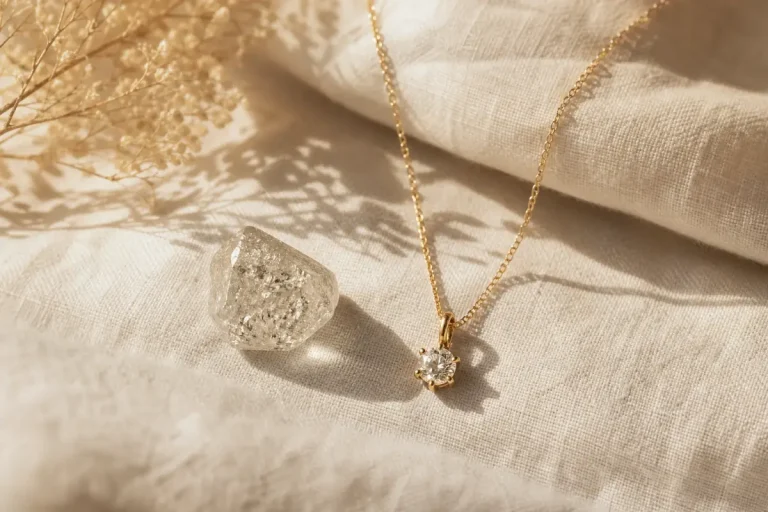
Pendant weight, bail position, chain gauge, chain length, and even the distribution of stones affect how a necklace behaves. When the visual center and physical center of gravity disagree, a piece that faces perfectly forward in a render may rotate, tilt, or migrate to one side in life. Our guide to necklace chain physics explains why link construction matters alongside appearance.
Ring interior geometry
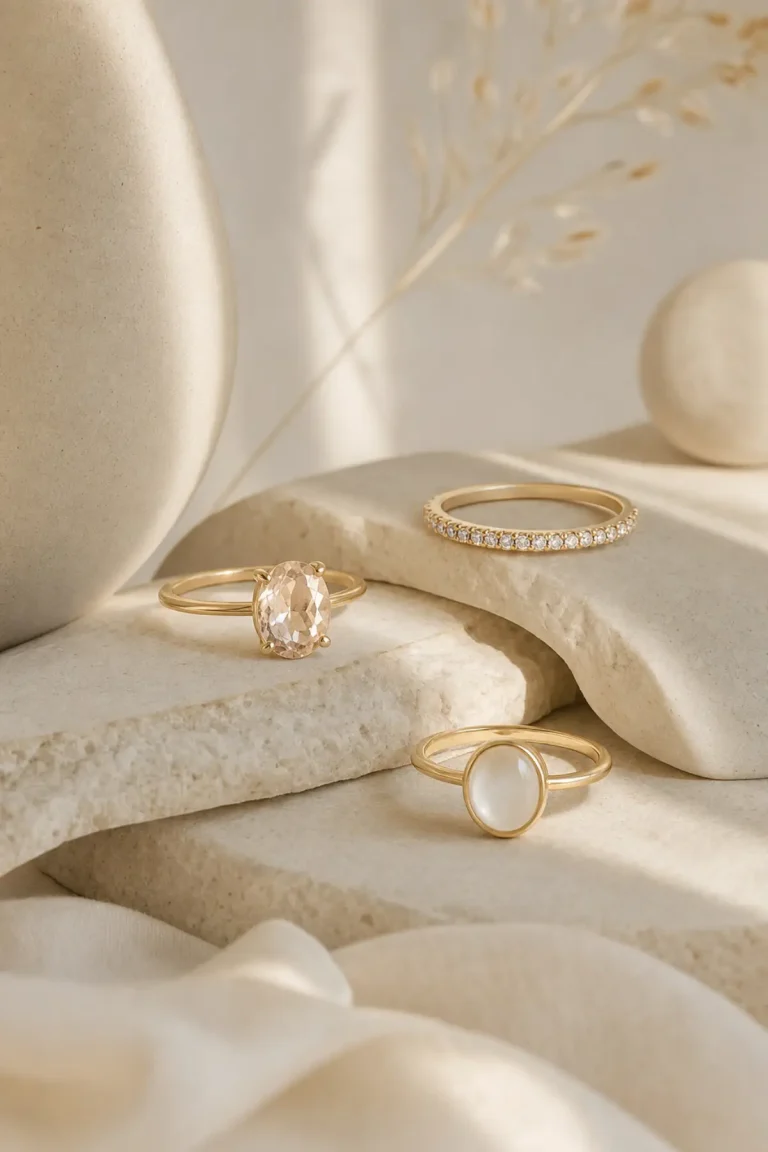
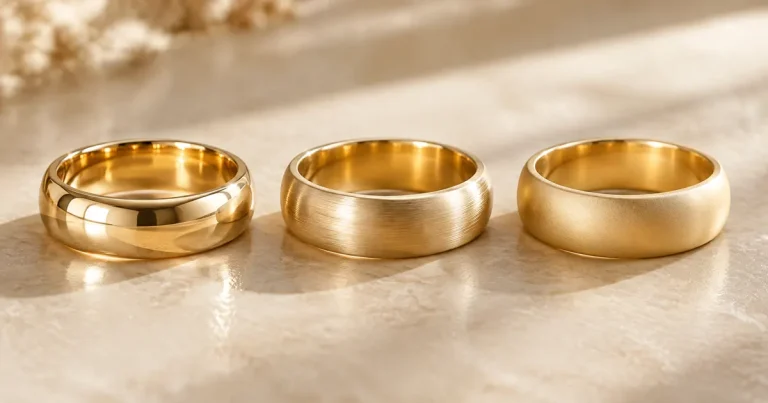
The inner edge of a ring is almost invisible in product photography, yet it shapes the all-day experience. A sharp transition can feel harsher under gripping and swelling. A softened bevel or comfort-profile interior can reduce that edge sensation, but it cannot rescue the wrong size or an excessively bulky design. Ergonomics is not a magic label; it is the result of coordinated dimensions.
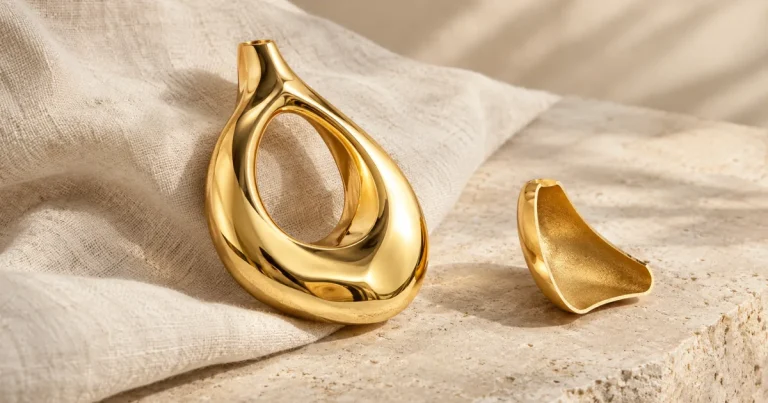
The same thinking appears in the trade-off between weight and scale. In our hollow versus solid jewelry guide, we show why lightness can be an intentional comfort decision rather than evidence of low quality. The responsible choice depends on what the object is expected to do on the body.
Testing Ethical Jewelry Sourcing Against Real Life Scenarios
As part of our ethical jewelry sourcing standards, Wearlumi uses internal wear-scenario checks during development, including fabric-snag checks, sleep-turning scenarios, and wrist-friction scenarios.
These checks are intended to reveal practical failure points that a static render cannot show. At present, Wearlumi is not publishing a formal protocol, sample size, duration, equipment list, or pass-rate dataset for these scenarios. They are internal development checks, not third-party certification or a claim of universal durability.
| Scenario | What the team looks for | What it does not prove |
|---|---|---|
| Fabric-snag check | Sharp edges, raised points, rough joins, or closures that catch fine and knitted fabric | That a design can never snag any garment |
| Sleep-turning scenario | How protrusions, closures, and forms respond to controlled side pressure | That wearing jewelry while sleeping is recommended |
| Wrist-friction scenario | Unexpected opening, uncomfortable edges, and abnormal surface wear from sleeves and desk contact | A guaranteed lifetime or immunity from scratches |
| Repeated closure and visual inspection | Changes in resistance, alignment, solder points, settings, and surface condition | An independent laboratory certification |
The language matters. A test can be useful without being a standardized certification. A scenario can expose a design weakness without predicting every home, climate, activity, and wearer. Responsible communication states both what was done and what the result cannot promise.
Testing also has an environmental footprint. The U.S. Environmental Protection Agency’s jewelry-manufacturing pollution-prevention guidance notes that common finishing activities such as tumbling can generate wastewater and sludge while consuming energy. More processing is not automatically more responsible. Recovery, filtration, chemical management, and waste handling belong in the test-and-finish conversation too.
Small-Batch Production as Inventory Restraint
Small-batch production is a core ethical jewelry sourcing principle at Wearlumi, not a zero-waste guarantee. We do not publish a fixed opening quantity or reorder threshold. The purpose is to validate demand with more restraint, preserve room to improve a design, and reduce the risk of committing too much material to an unproven style.
The trade-off is real. Smaller production runs can mean higher unit labor, more scheduling complexity, longer lead times, and more frequent quality communication. Those costs should be acknowledged rather than hidden behind a sustainability slogan.
Small batch is most credible when it is connected to a complete operating system: considered launches, replenishment informed by real demand, material recovery where feasible, realistic delivery promises, and a plan for imperfect or unsold goods. Without those pieces, “made in small batches” is only a quantity statement.
The Ethical and Compliance Cost Inside the Price
Responsible manufacturing has costs that are easy to remove from a product photograph: protective equipment, fire safety, working-hour controls, wage records, grievance channels, wastewater treatment, air-emissions management, hazardous-waste handling, test documentation, and corrective action.
The Responsible Jewellery Council Code of Practices provides an industry framework spanning ethical conduct, human rights, labor conditions, health and safety, environmental performance, due diligence, and product disclosure. The International Labour Organization’s business guidance likewise treats identifying, preventing, and mitigating forced-labor risk as part of supply-chain due diligence.
Wearlumi uses supplier declarations and internal review to inform supplier expectations. That is a limited and specific statement. It is not the same as independent certification, and Wearlumi does not claim RJC, SMETA, BSCI, ISO 14001, or another named certification unless a current, verifiable credential can be shown.
This distinction is not bureaucratic fine print. A supplier statement, a brand’s own review, an independent social audit, an environmental-management certification, and product-level laboratory testing answer different questions. Trust grows when those layers are named accurately.
Five Questions to Ask Before You Buy
- What is it made from? Look for a specific base metal, finish, and separate disclosure for posts or findings when relevant.
- What touches the body? Ask about prolonged-contact surfaces and whether any nickel-release or other compliance testing applies.
- Why is it built this way? Weight, clasp force, edge profiles, chain gauge, and center of gravity should serve the wearing experience.
- What was actually tested? Ask for the method and boundary. Internal scenarios, batch checks, and third-party certification are not synonyms.
- What part of the supply chain can the brand substantiate? Specific standards, records, and limitations are more valuable than a broad “ethical” label.
A Responsible Piece Is a Long-Term Relationship
Modern jewelry should do more than miniaturize a trend in metal. It should respect the wearer’s body, make sensible demands on materials, set clear expectations for suppliers, and earn repeated use. That does not require pretending that any product has zero impact. It requires replacing vague virtue with specific decisions.
At Wearlumi, our commitment to ethical jewelry sourcing is simple: fewer assumptions, more attention to wear, clearer limits on what our checks prove, and a willingness to treat comfort and responsibility as design requirements. A good piece is not the one that persuades you to buy again next week. It is the one you still reach for years from now.
Keep exploring
Sources and Further Reading
- European Chemicals Agency: Skin sensitising chemicals
- EUR-Lex: Nickel Directive 94/27/EC
- U.S. EPA: Jewelry Manufacturing Pollution Prevention Guidance
- Responsible Jewellery Council: Code of Practices
- Ellen MacArthur Foundation: Fashion and the Circular Economy
- International Labour Organization: Combating Forced Labour
Choose fewer pieces. Ask better questions. Wear what earns a place in your everyday.