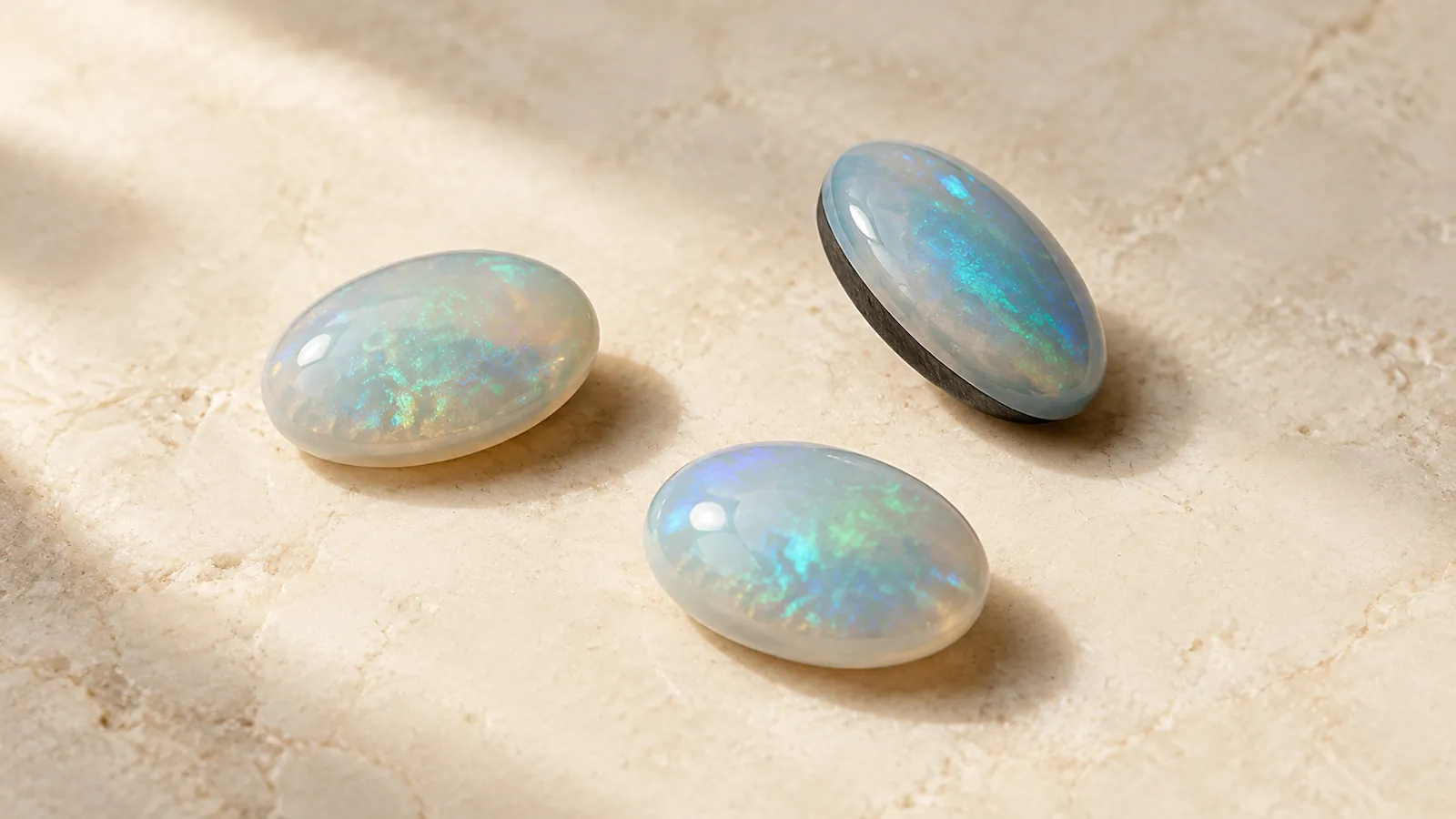
Opal Doublets vs. Triplets: What Are You Buying?
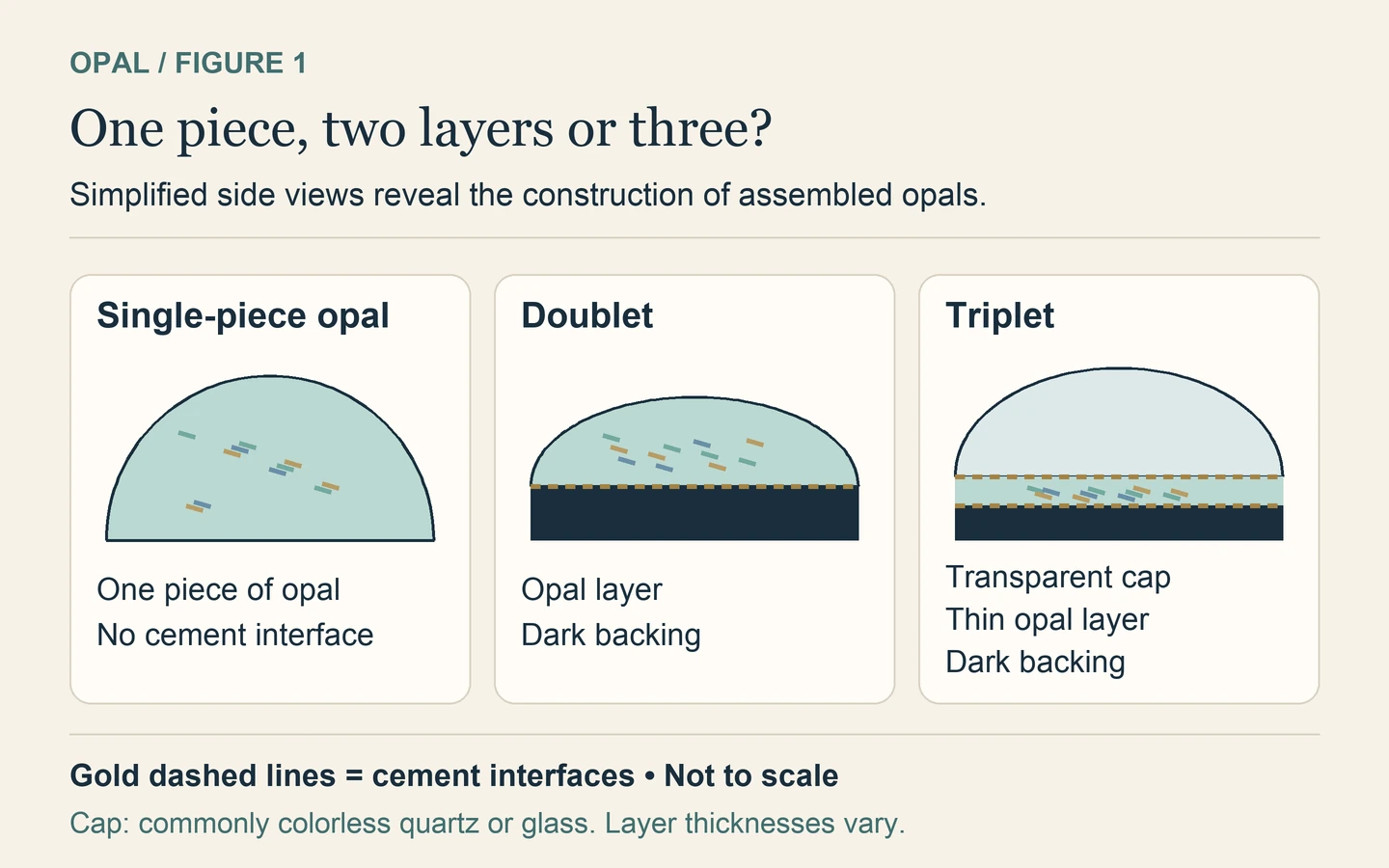
The main opal doublet vs triplet difference is the construction: a doublet has an opal layer bonded to a backing, while a triplet adds a transparent cap over the opal. Both are assembled gemstones, and both can contain natural opal. Neither should be sold to you as a solid natural opal. GIA describes these two assembled opal types.
A disclosed doublet or triplet can be a satisfying purchase. What matters is knowing which material creates the color, which layers you are paying for, and how the finished piece needs to be cared for.
In this guide
Opal doublet vs triplet: what changes?
A doublet leaves opal at the exposed top surface; a triplet places a clear cap above it. The names describe the principal material layers, rather than counting each adhesive film separately.
| Feature | Doublet | Triplet |
|---|---|---|
| Layer order, top to bottom | Opal, backing | Clear cap, opal, backing |
| Exposed surface | Opal | Cap material |
| Typical backing examples | Common opal, dark glass, or other backing | Dark glass, chalcedony, or other backing |
| Clear cap | Absent | Often quartz or glass; other materials occur |
| Care priority | Protect exposed opal and bonded join | Protect cap and bonded joins |
These examples follow GIA’s assembled opal descriptions. Exact components vary, so ask about the stone in front of you. A dark backing can make a light opal slice’s colors appear more intense, while a triplet’s cap gives the thin slice a domed covering. Opals Down Under explains how the layers affect appearance.
Are doublets natural opal, synthetic opal, or fake?
“Assembled” describes construction; “natural” and “synthetic” describe the origin of the gem material. Ask both questions.
- Solid natural opal: a naturally formed stone without an artificially bonded backing or cap. Natural boulder opal may retain its host rock; that naturally attached rock does not make it a doublet.
- Synthetic opal: laboratory-made material with characteristics corresponding to natural opal. GIA notes that synthetic opal can contain additional compounds. “Lab-created” does not tell you whether a piece is assembled.
- Assembled opal: separate components joined together. A natural opal slice can be one component, but the complete doublet or triplet is a manufactured assembly.
- Imitation opal: another material used to resemble opal. It should be identified by what it actually is.
GIA distinguishes boulder opal from assembled opals, and its guides explain synthetic gem materials and imitations and assemblies. GIA explicitly notes that assembled stones are not always imitations: thin natural opal may need reinforcement for jewelry. Calling every doublet “fake” misses that distinction.
Can you identify one just by looking?
Side views can suggest an assembly, but photographs and visual cues alone are not conclusive identification. Look for an apparent join beneath the opal or a transparent dome above a thin color layer. A setting that encloses the sides can hide the construction; even an expert may struggle to distinguish a mounted doublet from solid opal. Opals Down Under discusses these inspection limits.
A dark back alone is insufficient: natural boulder opal includes host rock. Likewise, vivid color does not prove a stone is natural, synthetic, or assembled. Request side and back photographs, written disclosure, and, when the amount at stake warrants it, an independent gemological assessment. Do not scratch, heat, or soak a stone to test it.
What should the price reflect?
Price should reflect the disclosed construction and the quality of the whole piece. Assembled opals often offer a less expensive route to a dark, colorful appearance than solid black opal; triplets are generally cheaper than doublets, according to Opals Down Under. Those are broad comparisons, not a formula for valuing individual jewelry.
Compare color, pattern, condition, dimensions, metal, workmanship, and return terms. Ask whether a listed carat weight means the complete assembly or the opal component. A large dome does not tell you how much opal lies beneath it.
GIA evaluates opal through factors including color, pattern, clarity, and cut, and notes that appearance changes with viewing angle and light. Request a moving video in more than one lighting condition. Wearlumi’s guide to why gemstones look different in different light adds context. Source: GIA opal quality factors.
How should you clean doublets, triplets, and solid opal?
For doublets and triplets, use a soft, slightly damp cloth, with mild detergent if needed, and avoid soaking or immersion. Opals Down Under warns that prolonged water exposure can allow moisture between bonded layers, leading to lifting or cloudiness. An accidental splash does not automatically mean the stone is ruined. Gently dry it and seek an inspection if its appearance changes. Source: specialist opal care guidance.
Solid opal has no assembly glue line, but that does not make every stone suitable for soaking. GIA recommends warm, soapy water for opal and documents treatments including oil, wax, and plastic impregnation. For a known solid stone, clean gently and follow advice specific to its treatments and setting. If its identity or treatment history is uncertain, start with a soft cloth and ask an opal professional before using liquids. Source: GIA opal care and cleaning.
Avoid ultrasonic and steam cleaning, harsh cleaners, high heat, and sudden temperature changes. GIA describes opal’s susceptibility to heat and fracture, while the specialist guidance warns against ultrasonic cleaning. A triplet’s cap does not make the assembly waterproof. Our ultrasonic cleaner safety guide explains why cleaning methods need to match the materials.
Your opal buying checklist
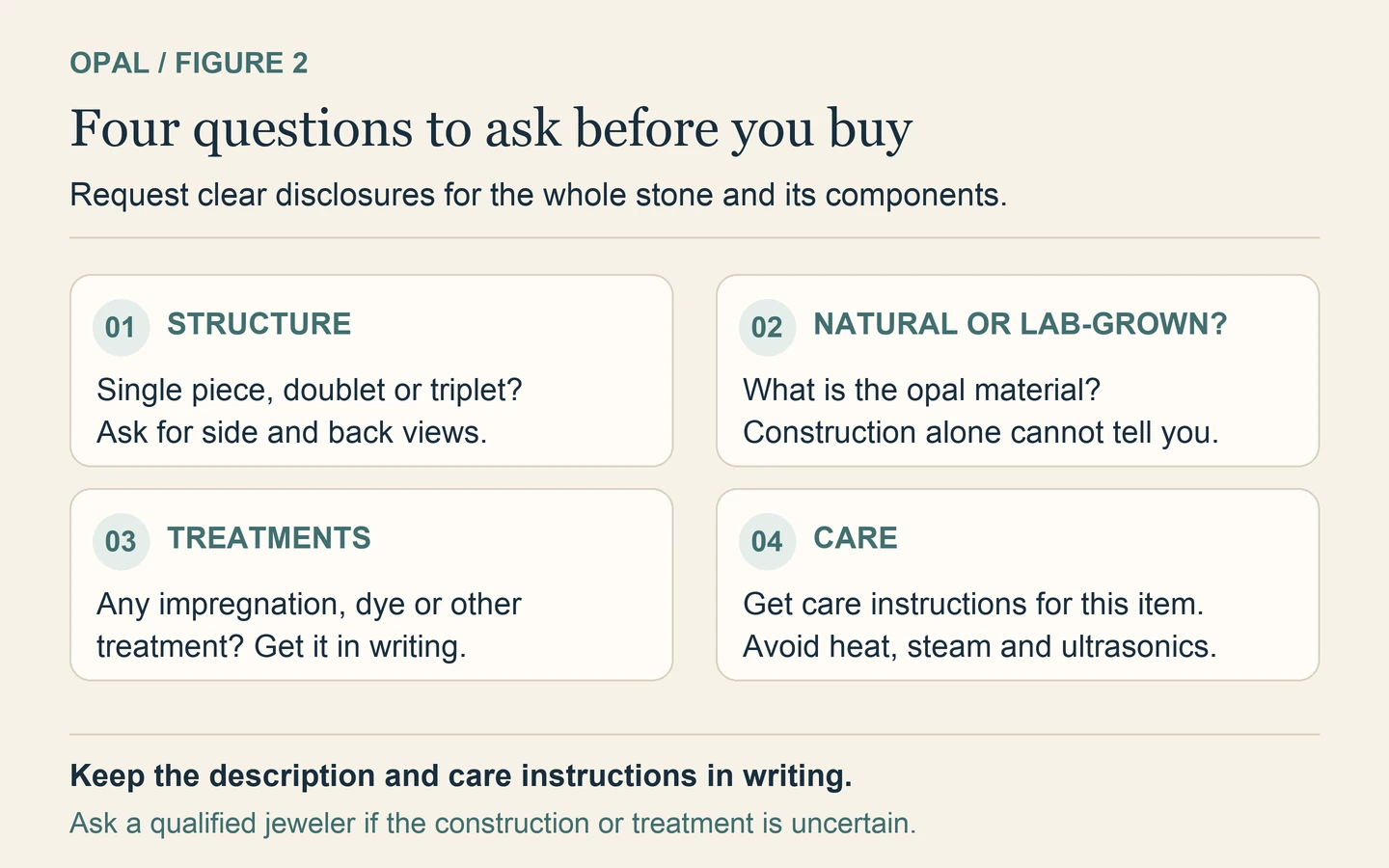
Before paying, get clear answers you can keep with the receipt:
- Name the construction. Solid, doublet, or triplet? Ask for that wording in writing.
- Identify the components. Is the opal natural or synthetic? What are the backing and cap, and are any treatments known?
- Inspect the actual piece. Request side, back, and moving views, plus disclosure of cracks, cloudiness, or lifting joins.
- Clarify size and weight. Record dimensions and what any carat figure includes.
- Match care to your routine. Get cleaning instructions and consider whether you will remember to remove it before water exposure or demanding tasks.
- Check your recourse. Read return terms and ask whether independent assessment is allowed during the return period.
Choose the piece whose disclosed construction, appearance, and care requirements fit your expectations. For more thoughtful jewelry choices, visit Wearlumi.