
Materials College · Optics
Stop Falling for the Word Games: Lab-Grown Diamond vs. Moissanite vs. Cubic Zirconia
For lab grown diamond vs moissanite, Three sparkly stones, three completely different materials. The labels hide more than they tell — here is the physics without the marketing.
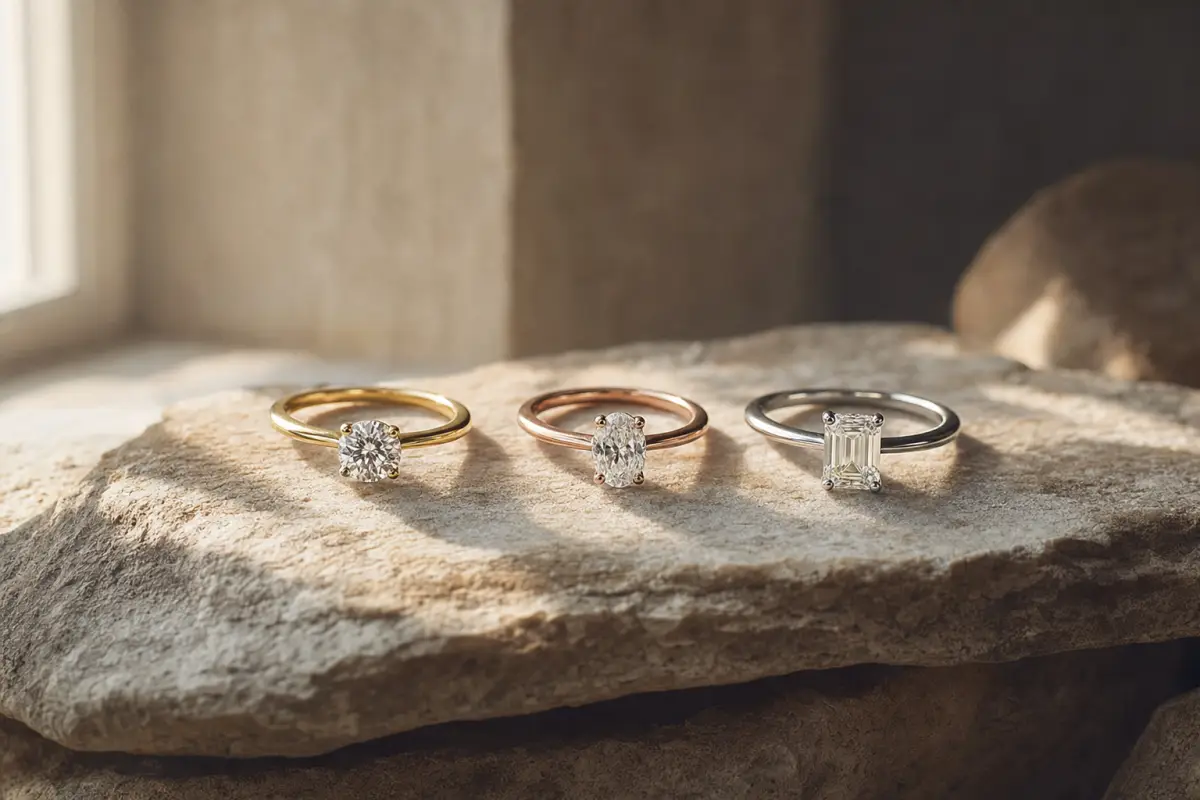
Lab Grown Diamond vs Moissanite: Light, Hardness, and Lifespan
Refraction is the bending of light as it enters a gemstone, and refractive index measures how sharply a given material bends that light; birefringence, or double refraction, splits each ray into two separate beams inside certain crystals.
These three stones get compared constantly because, from across a counter, they all just look like something shiny on a ring. The moment you add physics to the conversation, the differences stop being subtle. Each one bends light its own way, and your eye can tell if you know what to look for.
Every sparkle you have ever loved is light doing geometry. When a ray hits the top of a faceted stone, part of it reflects straight back and part of it bends as it enters the crystal. That bending is refraction, and it is the whole game.
Refractive index is the number that measures how hard a stone bends light. Higher numbers mean sharper bends, which means more light gets trapped, bounced around the pavilion, and thrown back at your eye. Diamond’s index is 2.417, which is excellent but not the highest on this list.
On paper, that makes moissanite the brighter stone of the two, because a higher index can trap and return more light. In practice, cut quality decides the outcome. A badly cut moissanite looks flat next to a well-cut diamond, and the reverse is also true. The number sets the ceiling; the cutter decides how close the stone gets to it.
Brilliance and fire are the two shows a cut stone puts on, and refraction drives both. Brilliance is the white light that bounces back at you; fire is the colored light the stone splits out of it. The better the cut, the more of each show you get from the same material.
Here is the part the marketing skips: some crystals bend a beam twice. Diamond is singly refractive. Every ray that enters comes back out as one clean beam, so its sparkle reads crisp and precise, mostly white with quick colored flashes.
Moissanite is doubly refractive, with an index of 2.65 to 2.69, above diamond’s. Inside the stone, every beam splits into two beams traveling slightly different paths. That phenomenon is birefringence, and it changes the look of the stone completely.
Those split beams are the source of moissanite’s famous rainbow fire. Because the doubled light exits at slightly different angles, it scatters color across a wider band. Moissanite throws a confetti rainbow that some people adore and others find too flashy; diamond fire, by comparison, is tighter and more controlled.
You can even see the doubling if you look closely. Under a jeweler’s loupe, moissanite’s facet edges can appear slightly doubled or fuzzy, while diamond’s stay razor sharp. It is a quiet tell that shows up under magnification, once you know to look for it.
You will notice the difference most in motion. As your hand moves, moissanite keeps flashing and throwing color from every angle, which is exactly what its fans love. Diamond’s flashes are quicker and tighter, more like a camera flash than a disco ball. Neither is wrong; they are simply different personalities in the same kind of ring.
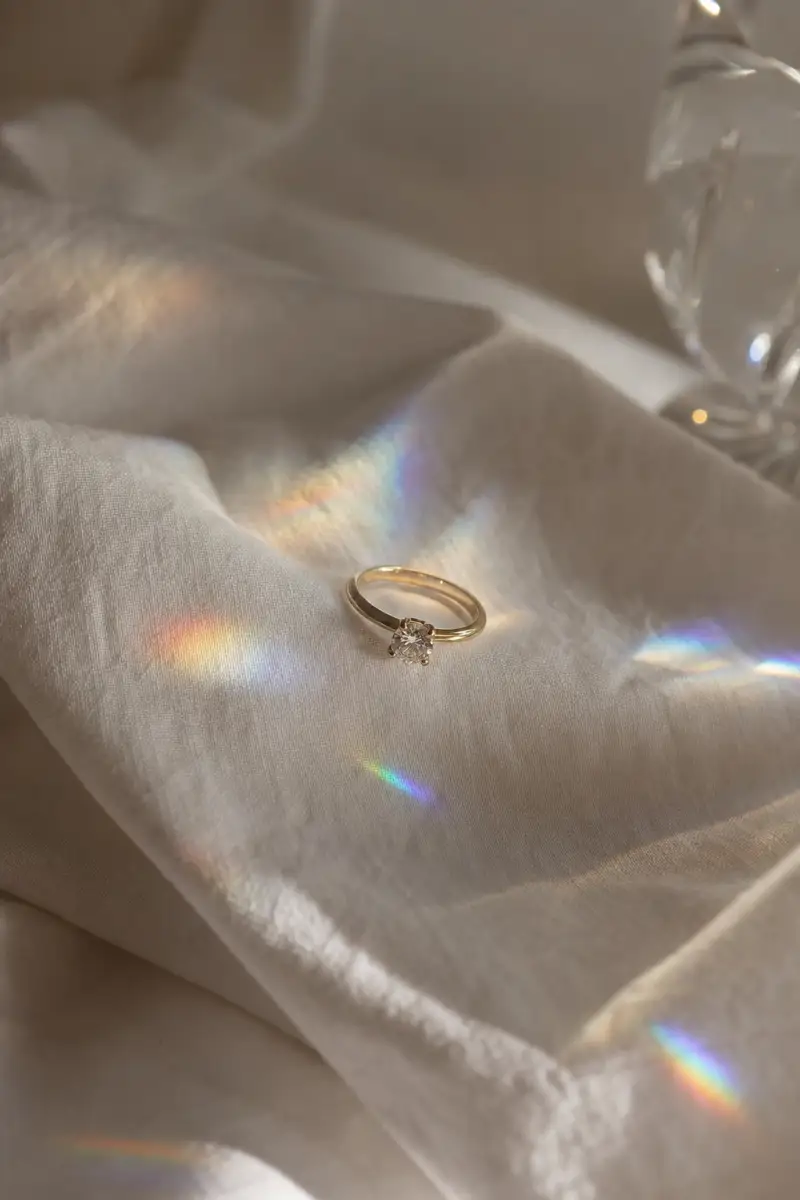
Cubic zirconia bends light the least of the three, at roughly 2.15. It is singly refractive, so its sparkle is clean, but there is simply less of it to work with. Next to the other two, CZ reads glassier and faster to give up its color.
Hardness and Lifespan: Why Only Diamond Passes the Thermal Conductivity Test
Hardness decides how long a stone keeps its polish, and polish is what you actually see. Scratches scatter light, so a stone that scratches easily will slowly turn cloudy, no matter how well it sparkled on day one.
The Mohs scale ranks scratch resistance from 1, talc, to 10, diamond, and the steps are not even. The gap between 9 and 10 is enormous. Two stones that sit close on paper can be far apart in real life.
Diamond holds the 10, and mined and lab-grown diamonds are identical here. The structure is pure carbon in a cubic lattice either way, so nothing you meet in daily life can scratch it. Quartz dust, glass, steel — none of it leaves a mark.
One honest caveat: hardness is not toughness. Mohs measures scratch resistance, not how a stone survives a hard knock. Every crystal, diamond included, can chip if it takes a sharp blow at the right angle. Hardness protects your polish; nothing protects a stone from a bad fall.
Moissanite, silicon carbide, ranks 9.25. That puts it above almost everything except diamond and well inside the zone of durable daily wear. A moissanite ring shrugs off years of countertops, doorknobs, and handbags without clouding.
Cubic zirconia, zirconium dioxide, lands at 8 to 8.5. That sounds close to 10, but everyday dust is largely quartz at 7, and the difference adds up. Over years of wear, CZ accumulates fine surface scratches that cloud the polish. It is also denser than diamond, so a CZ stone feels slightly heavy in the hand for its size.
That is the lifespan story in one line: diamond and moissanite keep their polish for decades, while CZ trades polish away year by year. You can delay the clouding with gentle wear and careful storage, but you cannot stop it. The material, not the care routine, sets the timeline.
Then there is heat, and heat is how the tester separates the honest stones from the word games. Diamond conducts heat extraordinarily well, so a diamond tester works by pressing a warm probe against the stone and timing how fast the heat spreads through it. Diamond drains the warmth almost instantly; cubic zirconia, a thermal insulator, barely moves it at all, so the probe reads it as not-diamond in a fraction of a second.
That heat behavior is also why a diamond can feel cool against your skin. The stone pulls warmth away from your fingers so quickly that your hand reads it as cold. It is the same physics the tester uses, and it is a fun party trick once you know it.
In practice, the whole test takes seconds. You ask to see the stone verified, the jeweler touches the probe to it, and the machine reports back. If the store hesitates, or only owns a thermal probe, treat the result as incomplete rather than reassuring. Both checks together leave no room for the word games.
Moissanite is the curveball. Its thermal conductivity runs close to diamond’s, so cheap thermal-only testers can flash green and pass it. Good testers add a second check: they measure electrical conductivity, because moissanite is a semiconductor and diamond is not. Any reputable jeweler’s tester separates the two without breaking a sweat.
Read the label before you buy. Diamond simulant or simulated diamond means not a diamond at all — almost always cubic zirconia or glass. Lab-grown diamonds are real diamonds, and U.S. law requires sellers to state lab-grown or synthetic plainly. Vague, dreamy names exist to blur that line.
| Composition | Mohs Hardness | Refractive Index | Refraction | Thermal Tester Result | Price Band | Best For |
|---|---|---|---|---|---|---|
| Diamond (mined and lab-grown): pure carbon, cubic lattice | 10 | 2.417 | Single | Passes instantly | Highest | Heirloom daily wear |
| Moissanite: silicon carbide | 9.25 | 2.65-2.69 | Double (rainbow fire) | May pass thermal-only testers; caught by the electrical check | Middle | Durable everyday alternative |
| Cubic zirconia: zirconium dioxide | 8-8.5 | About 2.15 | Single | Fails instantly | Lowest | Trend pieces, occasional wear |
The Clear Choice: Matching Your Stone to Budget and Wear Habits
None of these stones is a bad stone. Each one wins a different game, and the only honest question is which game you are actually playing.
- Daily forever. If you want one ring for every single day for the rest of your life, choose diamond. Lab-grown diamond gives you the identical material at a gentler price than mined, and it will still look freshly polished decades from now.
- Everyday, on a friendlier budget. If you want durability and fire without the diamond price, moissanite is the pick. It handles daily wear easily and sparkles harder than diamond. Just decide now whether you enjoy a wide rainbow flash, because it is not subtle.
- Seasonal, experimental, occasional. If the goal is the look for a season or a night, cubic zirconia is unbeatable at its price point. Treat it as a brilliant budget piece, wear it while the trend lasts, and retire it when it clouds.
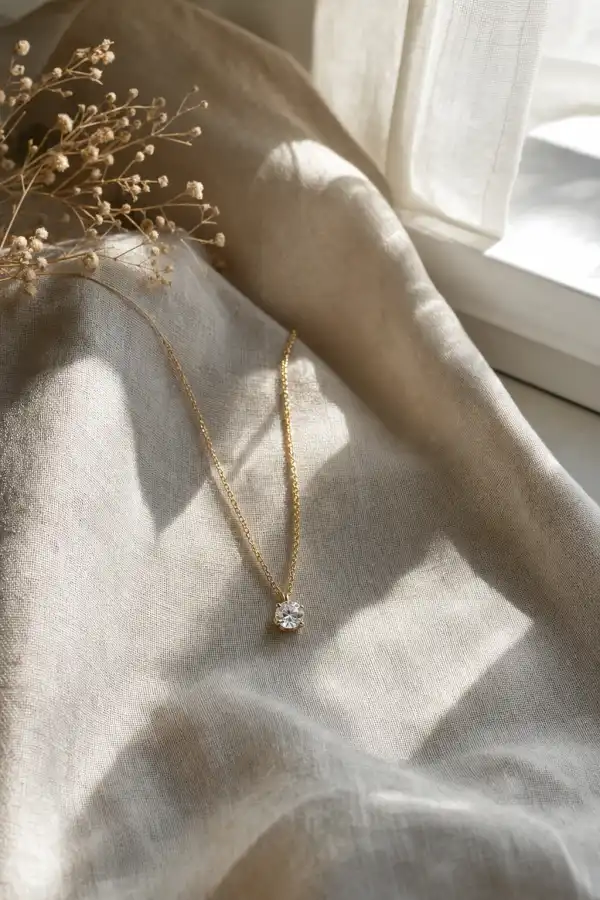
Budget frames the decision honestly, too. A mined diamond carries the highest price, and lab-grown delivers the same material below it. Moissanite sits a step down from there, and cubic zirconia costs so little that losing or replacing one is barely a decision. None of these numbers are fixed across retailers, so compare bands, not exceptions.
You also do not have to commit to one stone for every occasion. Plenty of jewelry boxes hold CZ for travel, moissanite for everyday, and a diamond for the milestones. Wearing them in rotation is the most honest use of all three, because each gets asked to do only what it does well.
Whatever the counter display calls it, each stone is exactly one material. Diamond is pure carbon in a cubic lattice. Moissanite is silicon carbide. Cubic zirconia is zirconium dioxide. Prices track durability and rarity in that same order: mined diamond highest, then lab-grown, then moissanite, then CZ.
When you shop, carry three habits and you cannot be fooled:
- Ask to see the stone tested in front of you, with both the thermal and electrical checks.
- Read the label out loud. Look for the words lab-grown, moissanite, or cubic zirconia — and treat the word simulant as a red flag.
- Sanity-check the price against the material’s band. A too-good price usually hides a softer, cheaper stone.
Marketing wants you to blur these stones together, because confusion sells. Physics wants you to know what you are holding. Buy the stone that matches how you actually live, and no label game will ever catch you.
Lab-Grown Diamond, Moissanite, and CZ: FAQ
Is moissanite a real diamond?
No. Moissanite is a different mineral entirely: silicon carbide. Diamond, whether mined or lab-grown, is pure carbon arranged in a cubic crystal lattice. The two stones share a sparkle, but they do not share chemistry, hardness, or thermal behavior. If a label calls moissanite anything other than moissanite, walk away.
Will a diamond tester pass moissanite?
A cheap thermal-only tester may. Moissanite conducts heat almost as well as diamond, so a basic probe can flash green and fool you. Testers that also check electrical conductivity catch it, because moissanite is a semiconductor and diamond is not. When in doubt, ask a jeweler to test the stone in front of you.
Which is best for everyday wear?
Diamond wins on durability, and a lab-grown diamond delivers that durability at a gentler price than mined. Moissanite is a close second at 9.25 on the Mohs scale, plenty hard for daily life. Cubic zirconia works for occasional wear, but it clouds over years of constant use.
Do lab-grown diamonds test as diamonds?
Yes. A lab-grown diamond is a real diamond — the same pure carbon lattice, grown in a lab instead of underground. It passes diamond testers exactly like a mined stone, because its physical properties are identical. The only difference is origin, not material.
Why does moissanite flash rainbow colors?
Because of birefringence. Moissanite is doubly refractive, so every light ray splits into two beams inside the stone. The split beams exit at slightly different angles and scatter color widely, producing moissanite’s signature rainbow fire. Diamond, being singly refractive, throws a tighter, whiter sparkle.
The sparkle you choose, understood.
One Comment